

 wellnessfitpro
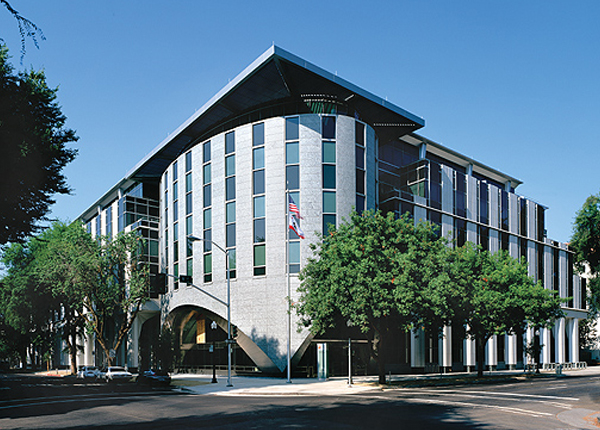
The California Department of Education building in Sacramento.
Credit: Louis Freedberg / EdSource
California policymakers are working to overhaul leadership and governance for the California Department of Education.
Gov. Gavin Newsom introduced the proposal in his January budget, and it is now being discussed in the state Legislature through Assembly Bill 2117. Under the proposal, an education commissioner appointed by the governor would assume management of the department in 2027, a responsibility currently held by the voter-elected state superintendent of public instruction.
The good news: For the first time in recent memory, the health, well-being and impact of the Department of Education are being discussed and debated by the people’s elected representatives. CDE is arguably the state department that has the greatest potential to generate a positive impact for California’s children, families and educators.
Proponents contend that moving executive leadership responsibility for the CDE from the superintendent (currently Tony Thurmond, whose term expires at the end of 2026) to the governor’s office will create greater alignment with the governor’s education agenda and with other state departments (public health, social services, etc.). The proposal seeks to reduce confusion and streamline a state-level governance system that few understand, and includes the superintendent, State Board of Education, governor and the Legislature.
California’s public education system urgently needs greater coherence. The proposed restructuring, however, could become more of a distraction than meaningful reform. The current proposal requires the new education commissioner to create a transition plan with the specific instruction to create a “fiscal plan ensuring same levels of current spending” and other administrative objectives. Conspicuous in its absence is a process for setting goals or the outcomes we expect from CDE and California’s support for public education.
Believing the adage that “form follows function,” the proposed restructuring could very well be counterproductive. Why? Because the restructuring process itself will require a significant amount of energy to complete. If at the end of it, we have a Department of Education that remains unfocused and underfunded, what will we have gained? As the saying goes, “If you don’t know where you are going, any road will take you there.”
Newsom, Thurmond and their respective teams and the Legislature deserve a standing ovation for the powerful education initiatives they introduced and supported during the past eight years. These include the unprecedented expansion of early and expanded learning, teacher residency, community schools, universal meals and much-needed charter reform. The positive effect of these will be felt for years.
Despite these accomplishments, Newsom and Thurmond left some of the serious systemic issues affecting public education in California untouched. Chief among these is the horrible legacy of Proposition 13 property tax reform and the resulting chronic underfunding of schools and their support systems. In addition, in specific relation to the California Department of Education, key structural issues hindering its performance include overdependence on federal funding (only a relatively small percentage of CDE’s current funding comes from the state); state salary structures that restrict the department’s ability to attract and retain staff; and term limits that result in leadership changes at least every eight years.
The proposal on the table does nothing to resolve these issues. Some may argue that it helps create the conditions to address them in the future. At worst, it will result in kicking the can down the road as implementation of the proposal, should it be approved, will certainly occupy the attention of the Legislature, the department, State Board of Education and the governor’s office for the next several years.
California may be better served if the Legislature considers more fundamental issues regarding how California serves its nearly 6 million students through the CDE, either independently or by amending the current restructuring proposal. These include understanding the department’s key goals, identifying how the Legislature will know when the department achieves them, and, importantly, how the Legislature will provide CDE with resources sufficient to achieve its goals.
California’s last serious systemic reform impacting public education was the Local Control Education Funding Formula, enacted by the Legislature in 2013, which successfully streamlined education finance and supported greater equity in statewide education funding allocations. One key feature of this reform requires every school district in the state to develop a comprehensive plan every three years, which must be developed with significant community engagement, and lay out the district’s goals and spending in relation to state and local priorities.
No such requirement exists at the state level. Would it be unreasonable for the Legislature to ask the California Department of Education to develop, and the State Board of Education to approve, a multi-year plan describing what key education goals California is seeking to meet and the costs involved?
The passage of the Local Control Funding Formula provides solid evidence that California can implement positive, systemic education reform. AB 2117 as currently formulated may simply set California up for more years of delay and bureaucratic reshuffling as opposed to rolling up our sleeves to ask and answer the more critical, deeper questions. These questions include when will our state leadership be ready to create a vision for, and fund, the kind of public education system our children, families and communities deserve and do the hard political work to make it happen?
•••
Glen Price is founder of the Glen Price Group and formerly served as CDE chief deputy superintendent and West Contra Costa Unified board member. Joe Boyd is the former executive director of the California Teachers Association and heads the Advocacy Resource Group.
The opinions expressed in this commentary are those of the authors. EdSource welcomes commentaries representing diverse points of view. If you would like to submit a commentary, please review our guidelines and contact us.
Unsorted,AB 2117,Glen Price,Gov. Gavin Newsom,Joe Boyd#Answer #key #questions #changing #leadership #Californias #Department #Education1777965237

