

 wellnessfitpro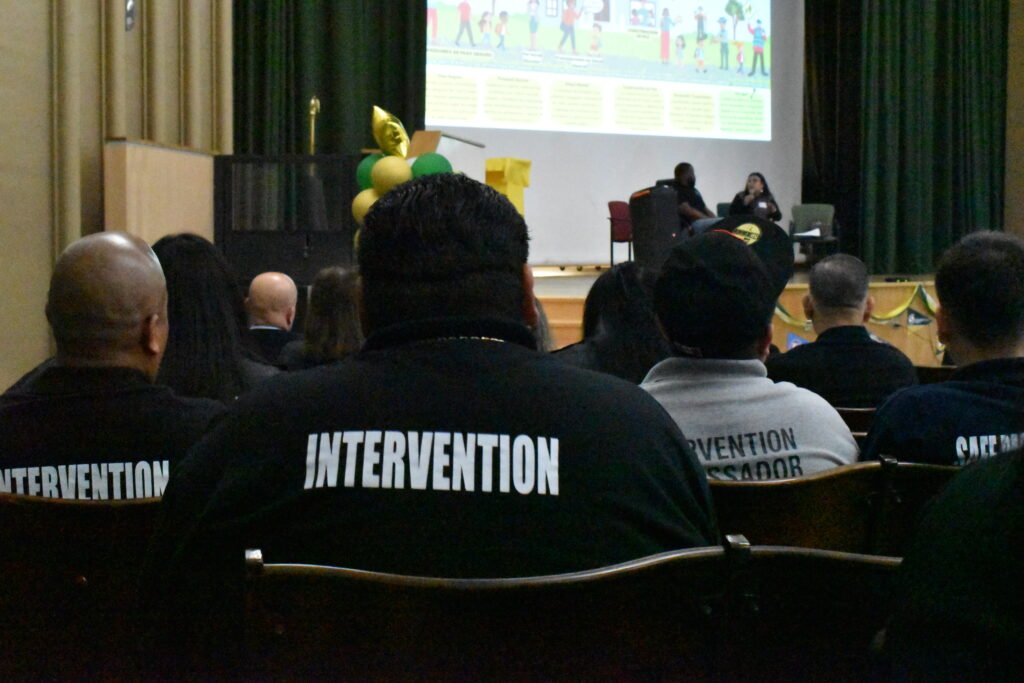
When Gustavo Rangel’s classmate was killed by a speeding car at Carver Middle School in Los Angeles, he and his peers were galvanized to push for better safety around campus.
“So we advocated, and we got a streetlight, and with community power, it wasn’t for just one school,” said Gustavo, now a freshman at Abraham Lincoln High School. His goal, he said, is for students to feel more supported inside school.
Gustavo was among several community members at Jefferson High School on Saturday who attended Building Safe Schools Together, a community event hosted by Los Angeles Unified School District board member Karla Griego. Students and families called on the district to bridge the gap between physical and emotional safety, with many feeling unsafe due to poor mental health and a lack of trust in school staff.
Gustavo began advocating for school safety through the district’s Safe Passage program, which enlists community members to ensure students travel to and from school safely. But in a district where most threats to safety stem from self-inflicted harm — with more than 8,400 students identified as at risk of suicide last year — Gustavo said many students also feel isolated and unsupported on campus.
“What’s not working is trust. Some kids don’t have that bond with teachers, staff members, administrators, and they’re not able to open up,” Gustavo said. “We need teachers and administrators who are able to acknowledge kids’ situations so they feel welcomed.”
LAUSD officials have described youth mental health as a post-pandemic crisis, with a sharp increase in students seeking help for anxiety, post-traumatic stress, depression and other conditions. Under a new contract with the teachers union, the district plans to hire more than 450 school social workers, pupil services and attendance counselors, though it will still fall short of meeting the required capacity.
Last month, Griego introduced a resolution, “Wellness Without Silos,” which proposes new Integrated Wellness Teams comprising educators, administrators and mental health professionals that coordinate support for students.
“Everybody plays a role, and when you work together, and you divide the labor, then you have support in problem-solving,” said Griego, who added that the event was for students and families to have direct input into the district’s vision for community-based safety.
jQuery(window).on(‘load’, function(){
var slider;
if ( jQuery(‘.image-gallery-slider’).length > 0 ) {
slider = tns({
controlsContainer: ‘#block-block_5f7ac0e381239a79e2cb8abf4b66013c .slide-nav’,
container: ‘#block-block_5f7ac0e381239a79e2cb8abf4b66013c .image-gallery-slider’,
navPosition: ‘top’,
autoHeight: false,
nav: true,
items: 1,
});
}
});
- Gustavo Rangel, a freshman at Lincoln High School, advocated to install a streetlight near his middle school. Vani Sanganeria
- Community members discussed how to prevent risky and harmful behaviors in students. Vani Sanganeria
- Jefferson High School and board member Karla Griego hosted the event on Saturday. Vani Sanganeria
Despite reforms, safety concerns persist
For Eloisa Galindo, student safety depends on support from administrators, teachers and mental health counselors alike. After her daughter, a senior at Garfield High School, developed long-term symptoms from multiple Covid-19 infections, she missed several weeks of school.
“She was sent to the principal, who yelled at her and made her cry,” Galindo told EdSource. Since then, her daughter has been too afraid to see a pupil services and attendance counselor, who works with families and students who are chronically absent.
Outside of school, Galindo said, encounters with police issuing tickets to families, combined with ongoing immigration raids, have left her family feeling “criminalized” in their own community.
“Students don’t need police, they need resources for mental health,” Galindo said.
In 2021, LAUSD expanded its Safe Passage program in response to community calls to reduce school policing following the murder of George Floyd. The program places trained staff and community partners along routes to and from school, and has improved student perceptions of safety at about 77 participating schools.
Still, fewer than two-thirds of high school students say they feel safe at school, and fights and aggression remain high since the pandemic.
Teresa Gaines, a parent of two children at a community school in LAUSD, said the Safe Passage program has helped her family feel safer on campus. She and other parents also volunteer to run a valet during student drop-off periods, directing traffic and helping students exit cars safely.
Gaines said many safety programs would be more effective if parents did not feel “pushed out” of schools. Her children’s middle school does not have a parent resource center — as their elementary school did — and she said many families give up trying to navigate the complicated paperwork required to volunteer.
Gaines recalled an incident in which a parent was scolded by an office assistant for incomplete forms.
“She was crying to us, telling two other parents how upset she is, and she’s saying, ‘I feel like taking my kids out of this school,’ ” Gaines said.
Research consistently shows that parent involvement is linked to lower school violence, a stronger sense of safety and higher student retention. With a 4.5% enrollment plunge, Gaines said LAUSD has even more reason to prioritize parent engagement.
“The district is worried about enrollment falling, and how do we attract and keep the students and families we have,” Gaines said. “Well, they need to feel safe.”
jQuery(window).on(‘load’, function(){
var slider;
if ( jQuery(‘.image-gallery-slider’).length > 0 ) {
slider = tns({
controlsContainer: ‘#block-block_25ddf148f0c127c6d0ef09b4c1fdd453 .slide-nav’,
container: ‘#block-block_25ddf148f0c127c6d0ef09b4c1fdd453 .image-gallery-slider’,
navPosition: ‘top’,
autoHeight: false,
nav: true,
items: 1,
});
}
});
- A school mental health worker discusses school climate concerns.Vani Sanganeria
- Students and families expressed concerns with school leaders and administrators. Vani Sanganeria
- For community-based safety, Griego said “everybody plays a role.”Vani Sanganeria
‘I don’t really want to be at school’
Antania Barker, an eighth grade student at Audubon Middle School in Leimert Park, said she began to feel unsafe at school after an academic counselor berated her. She had started intensive group therapy for anxiety, and her mother informed the school she would have to leave school an hour early to attend sessions. Soon after, Antania said the counselor began suggesting that she was unsafe to be around other kids, mocked her needing supervision and publicly disclosed details about her participation in group therapy.
“Instead of rubbing it in my face, she could have come up to me and said something like, ‘Hey, I know what you’re going through. It’s OK. You’re OK here,’ ” Antania told EdSource. “Instead, she broke me down, tore me apart, talked about how I looked, and said a bunch of other stuff out loud so everybody can hear.”
While U.S. schools spend about $4 billion annually on physical safety measures, a report by the Learning Policy Institute indicates that positive school climate and trusting relationships yield the greatest return on safety. Schools where staff are trained in social-emotional learning and mental health create more respectful environments for students, and students get into fewer fights and exhibit less aggression in school.
Still, many educators report feeling unprepared to respond to students’ mental health needs. Griego said her resolution would make training on social-emotional learning and positive school climate more accessible to teachers and staff.
“Sensitivity training is a good place to start,” Paula Barker, Antania’s mom, told EdSource. “I do expect counselors and school staff to have more empathy and less judgment.”
Because many of her peers also struggle with mental health, Antania said she did not feel judged by them.
“It was the adult staff who didn’t know how to handle it,” Antania said. “Now, I don’t really want to be at school or be around the adults.”
Gustavo said that after his classmate was killed, “the whole school was quiet.” His little brother, who attends Carver Middle, still does not feel safe at school.
“I felt safe because I was able to open up, I was able to speak up for myself, and I was able to create bonds,” Gustavo said. “What is working right now is that some students are able to open up with more resources like therapy and mental health (support).”
Related Reading
‘Wellness without silos’: Los Angeles Unified board member introduces resolution to reshape student mental health support
May 8, 2026
California students author new ‘digital wellness’ bill, say school cellphone bans fall short
April 16, 2026
L.A.’s special education parents constantly advocate — and students still feel unsafe at school, survey finds
May 6, 2026
Unsorted,Featured,Los Angeles Unified School District (LAUSD),Mental Health,School Safety,Student Wellbeing#broke #Students #families #detail #unsafe #unsupportive #environments #LAUSD #schools1778230377

