

 wellnessfitpro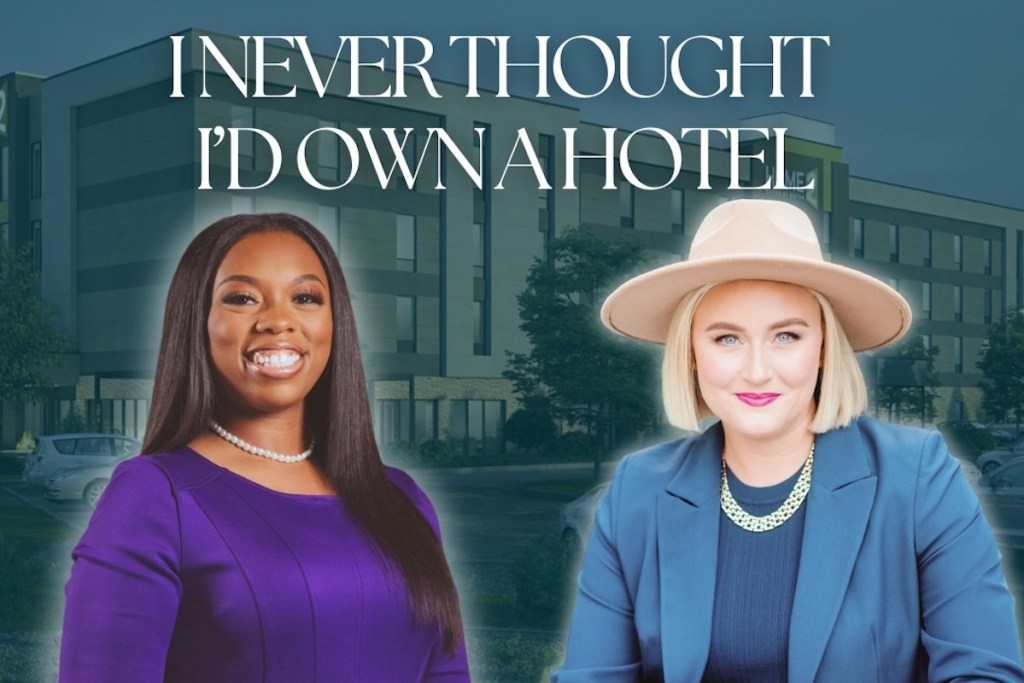
Subscribe Apple Podcasts | Spotify | YouTube | RSS
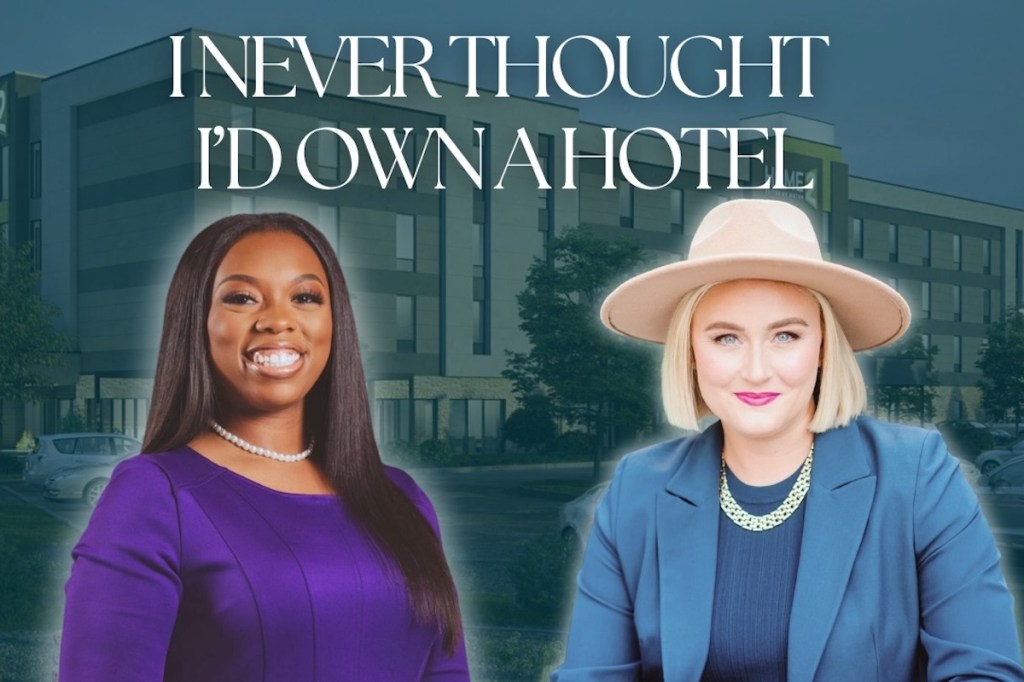
On this episode of Suite Success, host Katie Cline sits down with Davonne Reaves—hotel owner, asset manager, and founder of The Vonne Group—to break down how hotel deals actually get done.
From her start at the front desk to managing over $1 billion in hotel assets, Davonne has built a career rooted in understanding both the operational and financial sides of the business. Today, she’s focused on making hotel ownership more accessible and showing others what’s truly possible.
This conversation goes beyond surface-level advice. Davonne unpacks the realities of the capital stack, how investors play a role in funding deals, and why most people are thinking about “affordability” all wrong. She also shares why starting smaller is often the smartest move, and how building the right team can make or break a deal.
The result is a clear, honest look at what it really takes to buy a hotel—and why it might be more within reach than most people think.
This episode is brought to you by Lodgify and Bilt!
Connect with Davonne:
Watch This Episode
Transcript of This Conversation
This transcript is generated by artificial intelligence.
I am Davonne Reaves and you’re listening to the Suite Success.
You’ve just checked in to Suite Success. Join me, Katie Cline, for exclusive conversations with hotel executives, hospitality leaders, and industry innovators.
Together, we’ll uncover the strategies and techniques these masters of hospitality relentlessly refine. Whether you’re already in the industry or just starting out, tune in every week to unlock the secret to your Suite Success.
Hello, everyone, and welcome back to another episode of Suite Success. I’m your host, Katie Cline, and today, I’m thrilled to welcome Davonne Reaves to the show.
Davonne is a hotel owner, asset manager, host of the 5th and 28th podcast, author of the book, How to Buy a Hotel, and the founder of the Vonne Group, where she advises on hotel investments and strategy.
Over the course of her career, she has managed portfolios totaling more than $1 billion in hotel assets. Today, she’s on a mission to make sure hotel ownership becomes more accessible, particularly within the black community.
She’s also the visionary behind Vester, the first black-owned crowdfunding platform for hotel investments, and Stay Black Experience, one of the largest directories of black-owned hotels. Davonne, thank you so much for joining us today.
Thank you for having me, Katie.
You started your career at the front desk, and you are now a hotel owner and asset manager. Take us back to that first job. What drew you to hospitality in the first place?
You know what?
I come from a big family. One, thank you again for having me on your show. But I come from a big family, and it’s just we take care of each other, we’re hospitable.
I was raised in the South, so the South is known for our hospitality. It was just my godmother, she was an event planner. We always traveled.
We had an annual or we still do annual family reunion, and at the time, it would be at the embassy suites.
3:04
Path to Ownership
I would have never thought in a million years that I would own a hotel or even work in one. But I literally was standing in a lobby of a hotel that I was volunteering, and the room’s executive was like, you smile a lot, do you want a job?
That was pretty much my story, and I’m here today because of it, because of my smile. There you go. You know what?
Honestly, I have heard a similar story time and again on this show, and that’s what I love so much about the hospitality industry, is you still frequently hear of people who started at the front desk or as a dishwasher, or on these more entry level
roles, and then come up the ranks to either C-suite positions, ownership positions, executive positions. It’s really special, I think, to our industry.
Absolutely. It is.
So you started at the front desk. Walk me through those roles that then eventually brought you to asset management and then ownership.
Oh, front desk, then I did behind the scenes, back at the office. All this while I was in college. Fast forward, graduated from college, and then I worked at…
I actually took a non-paid internship at Horwath HTL, which is a high-sensitality consulting firm. And the reason I took a non-paid internship after college, of course, my dad did not agree with that.
A lot of family members did not agree with me working for free after you graduate. Like, the point is to do that while you’re in school, right?
Yeah.
And so, actually, I skipped the beat. What led me really into hotel ownership, I was a part of this organization called Under 30 Gateway, which was a part of the American Hotel Library Association.
I was on the board, and it was a group of Indians, and they owned hotels. And, you know, everybody had introduced themselves and, you know, said what they did.
And so these were the first, like this is my first introduction to hotel ownership, especially at a young age. And I like both when I was like, wait a minute, like you can, wait a minute, you owned and you developed your hotel, like what is this?
5:10
Asset Management Lessons
And so I was just like on a mission, right? And fast forward, now I can go back to Hote Rock. So I would let me go to Hote Rock, H-T-L.
I was like, okay, if I want to own a hotel, in my mind, I’m like, okay, I need to work for hotel owners, right? But in my mind, that is the best way to become a hotel owner is to, you know, work for, you know, be a consultant.
And so that’s how I learned about hotel ownership and asset management. It was an asset management firm, and we were working on behalf of the owners on development projects. So I was there for three months and I paid, and they loved me.
And so then they decided to keep me and moved me to full time. So I was there for two years. Fast forward, I moved to Boston.
I started working at CHM Warning, which is a larger firm, larger asset management firm. Again, with the same goal in mind, working with hotel owners and understanding the hotel ownership process.
And that’s where that billion-dollar portfolio comes in. So I was asset managing, we’re supporting asset managers in large hotel assets, 1,600-room plus hotels, very complicated, multi-million-dollar assets.
And so the value led to the billion-dollar portfolio. And again, great, like, fast-track, owning to hotel ownership rate.
Again, learning about the capital stack, you know, learning about, you know, how to put the deal together, the full life cycle of the hotel, the complications that happens with the hotel, you know, the insurance claims that happens when something
happens, you know. How can you mitigate expenses as well as increasing revenue? You know, that was our job as an asset manager. I mean, we had to do it at a large scale and very at a high level scale, right?
And what led me to want to help others get into this space, I noticed that there weren’t a lot of women. I noticed there weren’t a lot of people who looked like me. And I was like, okay, you know what?
I want to see more people who look like me and I want to see more women, right, in this space. Because this, you know how it is. It’s nothing like being with other women and we help each other, we understand each other, we think differently.
We just moved differently, right? And so there wasn’t a lot of women in the transactional side. Fast forward, I was in Boston for two years, extremely to go, great company.
Shout out to see it in the morning. And then we moved, I moved back to Georgia. In 2017, I formed my consulting group called The Vonne Group, which is a consulting firm.
And that was my first time being a full-time entrepreneur, right? And I’ve been an entrepreneur ever since. It is the craziest thing in the world.
Nothing can really prepare you for other than doing it. That’s just like the, really, as you know, that’s really the only way to prepare you for it. Every day is a new lesson.
Unless you go open a franchise, that’s probably the only thing that can prepare you to be an entrepreneur is owning a franchise, because it’s just, it’s step-by-step, you know, their procedures, but other than that, when you’re creating your own
vision, your own business is completely different. vision, your own business is completely different.
8:39
First Hotel Deal
And then fast forward to 2017, had some personal issues, meaning, you know, my father passed away, then I gave birth to my son, and then my grandmother, all of this being an entrepreneur, right?
Again, you know, how can you navigate, especially being a new mom and being an entrepreneur at the same time is crazy. So now I’m like, oh my gosh, I have this little human to support, right? So it’s difficult, right?
And he’s just been my strength and guide in life to, for making me want to work harder and give us a better life. Because for some reason, my little one is very expensive. He has expensive taste.
I don’t know where he gets it from. I mean, even while I was pregnant, he only could drink Fiji water. I said, what do I have on my hands, right?
There you go. Exactly. In 2020, I acquired my first hotel outside of corporate, and with my business partners in Oklahoma.
That’s the one where we made headlines. We bought it for 8.3 million in a little bitty town, 40 minutes outside of Oklahoma City, called El Reno, Oklahoma, home to Suites, 85 rooms. We still have that hotel.
And then fast forward the next year, 2021. Now, mind you, we bought the hotel in COVID, right? 2020.
Right. Then we moved on into 2021. We acquired two more hotels in Indiana, Hampton Inn & Suites and Scottsburg, Indiana.
And we actually just sold those last year. We sold those in July of 2025. And then in 2022, I launched Vestor.
And the reason why I launched Vestor, oh wait, I skipped a beat. 2021 is when I launched Stay Black Experience, because there was a lot of people asking for black, where are the black owned hotels? I was like, well, I just created it.
I created the directory. And then in 2022, launched Vestor, because I noticed that when I was raising capital for my project, it was a little difficult. And then after we raised the capital, we had people who wanted to invest.
And they were like, oh, Davonne, you know, we’re wanting to invest. We don’t know where to go. So I was like, oh, but here’s a problem.
How can I solve it?
Yeah.
Right. Create Investor, we had to become, so it’s a process. It’s not just like a website.
I think some people think I just put together a website. And those were very compliance heavy. Member of FINRA, which stands for the Financial Industry Regulatory Authority.
And so from there, we raised a little bit over $4 million for two hotel acquisitions, one hotel development in Puerto Rico, a car wash and a hotel fund.
So we are one of the few crowdfunding platforms that only focus all commercial real estate and including hotels. And now I am talking to you today, Ms. Katie Cline.
So that is our life in the next show.
That is a lot.
A lot is happening in the next show.
First, I’m so sorry about the loss of your dad and your grandma. And I couldn’t agree more about what you were talking about with your son.
Like when these little humans come into the world, all of a sudden we get very focused on what we want to build and create. And there’s just so much I want to talk to you about.
First of all, to really have that forward vision from that young age of, I want to be a hotel owner one day, and I’m willing to take the unpaid role that everyone thinks is crazy.
At a young age, it’s really hard even now at my age to block out the noise of other people not understanding why I’m doing certain things or making certain choices.
12:25
Capital Stack Basics
But I really respect that you were able to do that at such a young age. And it proved so crucial to really your entire story of getting in. Three months later, you were being paid.
It’s led to the next job, to the next job, to owning yourself. I think that’s incredible. And then to also say your very first hotel deal during 2020, when the industry is collapsing, it was $8.3 million.
That is a sizable first deal.
Yeah, for first deal, it is. Yeah, it is for first one.
And you referenced earlier the capital stack.
And this is something that even for me, I’ve worked in the hotel industry for a couple of decades, and I know a lot about hotels, but I didn’t know about this whole side until I started spending time and taking courses at Cornell and learning about
it. So can you talk about what that means, the capital stack and how are hotels typically purchased?
Yeah, so the capital stack is essentially the money. I’m just going to make it real clear. It is the money side of the hotel.
It is, and I, and a lot of people don’t realize that hotels are, it’s a form of real estate. It’s a type of real estate. So if anyone’s ever bought a house, there’s the mortgage and then there’s the down payment that you have to put down for a house.
House is real estate. A hotel is real estate. So a hotel has a mortgage, and then you have to put down equity.
So essentially, that’s the capital stack. What makes it a little different from residential is when you get into commercial and hotels, the capital stack becomes a little bit more complicated.
The reason why, because you have to bring in investors, and that’s what we did, to come in on the equity side.
Then there’s different loan structures, there’s different mortgage structures, right, that you have to, for the debt side, so you have debt and equity, that’s essentially the capital stack for the folks. They’re like, what is that?
So I’ll give you a little crash course real quick so you sound out good during these conversations, right? So you have the debt and equity stack, so the debt is the mortgage and the equity is pretty much down payment.
And so I’m just going to keep it real simple. For our hotel, our capital stack would have looked like, since it was a new, since it was an only acquisition, it wasn’t as complicated, you know, we had a mortgage, we basically came in and took over.
That particular owner was Doran Colvin, a lot of people, it was more, our deal was more so creative financing, which I don’t recommend anybody do for the first deal.
Basically, we took over the loan for the existing owner, because, you know, COVID and everything, he didn’t want to lose his hotel. So we basically took over the loan and we didn’t have to raise as much.
Typically, for a down payment for a hotel or for commercial real estate, you have to put 20 to 30 percent down. A lot of times people don’t have the 20 to 30 percent. So what do they do?
They call their friends and family or they… Yeah, usually that’s what they do the first time around. They call their friends and family to get the 20 to 30 percent.
So typically, when I work with people, you see this book back there, How to Buy a Hotel. I also say it in the book, You Should Fight On Amazigh. But typically, what I say when you…
For my first time, hotel owners try to find something that’s five million or less, if you can, because you need to put down the down payment or the equity, which is 20 to 30 percent. So you’re looking at about…
If you do a whole time, it’s about five million. You’re looking at putting down a million dollars. Well, you may not have a million dollars, right?
Or you may have a million dollars, but you don’t want to put it all in a hotel. Maybe that’s all you have, and you don’t want to put it. So you want to diversify it.
And so, Katie, you’re like, OK, you know what? I’ll bring in my friends and have them come in with like a hundred or somebody else come in with 200. And I have 300 or you know what?
Maybe I can use some of my retirement or maybe I can use some of my socks, you know, to come up with that down payment. Or business credit. Sometimes people use business credit.
Some people get a line of credit. I’m not a financial advisor, put that disclaimer out there, you know. Some folks, they take out a line of credit from their home.
So there’s different creative ways how you can come up with that down payment. So that’s why I say the smaller you can start the better. So that way you can just get your feet in the door.
And because even when you put down the equity, you still have to possibly renovate the hotel.
You know, you still have to have extra cushion for, you know, closing cost or, you know, sometimes the bank like to see three months of liquidity, you know, afterwards. So that’s why we say start like, you know, five million or less if you can.
There are loans such as the SBA loan, which is a part of the Small Business Association. So it’s a government backed loan. The interest rates are typically more favorable.
And they’re more, that’s more of a first time hotel owner friendly loan.
17:27
Crowdfunding
So those are sometimes going with your community bank who lends, because not everybody lends to hotels because it’s a complicated asset. So hopefully that explains in a nutshell. Sorry, long detailed answer.
No, but I think you did such a great job of making it simpler.
And, you know, when I first started to think, oh, maybe I’d like to own a hotel one day, I was thinking very black and white in the sense of, I guess I need to wait until I have 25 percent to put down, and that’s the only way that I could ever own a
hotel. And wow, these hotel owners must be very wealthy people.
And then starting to learn about, like you talked about, fundraising from different people and putting that capital stack together to create the total amount of money that’s needed, but it’s not all from your pocket, and maybe not at all from your
And that’s really why I create an investor, right?
So someone like you, Katie, is like, you know what? I want to buy a hotel and only have 200,000, but I need 800,000 more, right? And I don’t really know anybody with that, because not everyone knows people with like 100, 250,000.
I’m just going to be honest, not everybody knows that. I had to grow to that point to meet people who that can invest. I didn’t start off with that, right?
And so you’re like, okay, well, where do I go? Like, I really have this great deal. I’m going to put together the project.
I’m going to manage it. I put together this excellent team. I put together an excellent manager.
I found the right location. I know how to, I can find the right operator to manage it. I got the loans.
I found somebody that will loan me the money. The issue is, is I don’t have the 20 to 30 percent down for the down payment.
And so that’s why I created Vestor, the crowdfunding platform, because now you have a marketing tool to go out and to help you find capital for your deal, right? Because guess what?
There are a lot of investors who do not want to work on hotel projects. They don’t want to work there. There are doctors, there are lawyers.
So let me rephrase that, you know, they don’t want to work. They do want to work. They just they want to work on what they want to work on.
Right.
And so they don’t want to work in a hotel.
They don’t want to, you know, or buy a multifamily unit and they get a call at two o’clock in the morning or they’re in a hotel and it’s two o’clock in the morning and the general manager just queered. The night, night audit just called off.
And so now somebody has to come in and work the ship. Not everybody wants to do that. So they’ll, but they still want to make money and generate a return from the profits of the hotel.
So they invest passively. So basically, what I’m doing is someone like us, who’s owning a hotel, doing the work, creating the experience. And then there’s some people like, you know what?
I’m going to let y’all have that. I’m just going to invest and I want to see my return. I want to hear what’s going on with the project, but I don’t need to get out of nitty gritty.
I don’t need to get out of detail. It’s going to make my head hurt. Y’all just let me know on a monthly or quarterly basis.
And then I want to see my dividends. And then when you sell it, I want my return. And in my principle, and we’re going to keep moving.
So there are some people who are like that. And so guess what I just did? Well, let me see how I can connect you all.
Yeah.
And I think it’s so important that you touch on that because that was initially my thinking too of like, well, if they have the money, why wouldn’t they go do it themselves?
And it’s such a proof of like when things are easy to us, or when things are obvious to us, it’s not the same to other people. I can see an asset and see how we can reposition it and what the guest experience should be and how we could market it.
And I could know all of that, but be lacking on the financial side. And you could have someone else who has the money and who likes to go to places like that, but can’t identify how to create it or just doesn’t want to.
Right. Yeah. Yeah.
You know, like, that’s why people hire your stylist, right? Because you’re fabulous with your hat. See me, I wouldn’t have thought to put the hat on.
I would have had the stylist would have had it. And that’s just not how my brain works. So, you know, to you is simple.
You know, you got your plan. You got your, it’s simple. But to me, I’d be like, oh my gosh, I wouldn’t think, I just don’t think that.
But then people in the same breath, oh my gosh, Davonne, how do you put together the complicated hotel structure and then raise millions of dollars and they come up with a whole brand and they come up with a community. To me, I can do that. Right.
Taking out an outfit stresses me out.
I disagree because you look so fabulous right now.
Somebody take this out, I’m trying to tell you. I’m trying to tell you. I’m trying to take it out.
This is not, I can’t take credit, right? So, so me, you know, that’s me. I remember when I brought my house, they were like, what color do you want to watch?
It was so stressful. I was like, what color? Paint?
I was like, I was so stressed. So I had to ask somebody.
Yes, to know what we’re good at and then ask other people who are good at the things that we’re not good at and leave it to them.
22:36
Asset Management Explained
And leave it to them.
And my friend is an interior designer. I was like, because my real estate agent was like, Davonne, the seller wants to know what paint you want to know. I was like, oh my God.
I mean, it was giving me a headache. I was like, what do you mean? I called my girlfriend who was an interior designer.
I was like, they want to know what paint I want. What color? And to her, she loves paint.
Like she literally loves the different colors. She’s a colorist. She loves that.
That’s not my ministry. I just like green. That’s it.
That’s all I got on it, right? That’s all I got. I ain’t got anything else.
She loves the different shades of greens and the hex colors. That’s not my ministry, right? But she also doesn’t understand how to put together a hotel deal.
Right, right.
And let’s talk about something else you’re great at. You have experience in asset management. So can you give us like a 101 explainer on what it actually means to manage an asset in terms of hotels?
That is a great question.
So a lot of people get asset management and management companies confused. Those are two different things, right? So management companies manages the day to day operations of a hotel, right?
So they’re managing the guest experience, you know, if there’s a leaky toilet, you know, if they have to walk guests, they literally put in hands and be is, that’s what the management company, they’re putting heads and beds and they’re doing revenue
management with the fluctuation of the rates, right? So that’s the management company, right? An asset manager is managing the management company. They’re looking at it from an ownership standpoint, right?
So an asset manager is, you know, make, if it’s a franchise hotel, you know, keeping that relationship with the brand, finding the management company, selecting the general manager or making sure that the management company selects the right general
manager and director of sales for the hotel. You know, the asset manager is making sure that you know what, and at the end of this year, we’re not going to be doing well because it’s a slow season. So what can we do?
What’s the strategy to drive revenue during the summer so that way we’ll have some cash for the end of the year? Like, so, because the operations are thinking day to day.
They’re thinking about today and tomorrow, getting some books, you know, some strategies to get people in the room. But the asset manager is thinking, okay, how can we position this hotel so that we can sell it in three to five years, right?
The asset manager is looking from an ownership standpoint of, how can this hotel make money? How can it pay back its investors? How can the owner make a profit?
Right, because that’s why we’re in it, we’re in it to make money. Of course, we want to create an experience, but at the end of the day, we’re here to make money. I’m just going to be honest, right?
So when the asset manager is looking like, okay, if we buy this hotel now, and maybe we can reposition it in three years, so maybe we can refinance it, take that money out, possibly pay back the investors, or maybe take that money and reinvest it
into the hotel. So the asset manager is from a strategy standpoint on how to generate profits from the asset.
25:52
Hotels Need Humans
So the asset manager is overall strategy, big picture, holding the general manager accountable, holding the director of sales accountable, holding the management company accountable. Now, they’re not all, everybody, they’re not all good.
What I mean by that, I’d come from, I look at asset management a little differently because I worked in a hotel. So some asset managers, they’ve never worked in a hotel before, like ever. So they’re just numbers driven.
But this is still hospitality at the end of the day. You can’t change it, you can’t AI it. You can’t, at the end of the day, people still want to talk to people, they still want that experience.
We even have some people who are leaving Airbnbs, who are going back to the hotel, staying more in hotels now, because they want that extra touch, they want that experience that they may not be able to get within a short-term run-out.
26:57
Service Scores Collapse
And so, some asset managers or even some owners, they’re so far removed that they’re looking at the P&L or they’re looking at the employees as a number.
So, let me scratch this person off so we can increase the bottom line or bring more money to the profits. Well, that person has a family. That person knows every guest by name that walks into the door.
So, you just eliminated a person that knows every guest by name. So, that’s why these guests are coming back. Because I’m just going to say John Smith knows every person by name when they walk through the door.
But you got an asset manager or an owner is like, oh, we need to cut costs. They make them too much. They may hear too long.
They’re not bringing any profit because they don’t see it because they don’t know. So, we’re going to get rid of them. But now the guests are like, now the morale has gone down in the company, in the hotel.
The morale is gone because you just let go somebody that was the heartbeat of the hotel. The guests stopped. So, now the morale is low.
And so, the morale is low and then the employees are like, they don’t really care. So, now they don’t care. So, now they’re not really taking care of the guests.
Well, now since they’re not taking care of the guests, the guests, they don’t want to come back. But see, I think like that because I worked in the hotel. But if you never worked in a hotel, that doesn’t make sense.
What are you talking about? We just find somebody else. No, you can’t.
Or we can just replace it. You know, we can have, you know, two people just do one job. Now this, but we’re not going to increase the pay.
What? Right.
28:37
You Cannot AI Hospitality
So, where do you do that, right? So, that way you as an owner or an asset manager can make more money, but you’re not understanding why your guest service scores are so low. You’re not understanding why the turnover is so high.
But see, I look at that because I worked in a hotel before. So, my thought process is different because I’ve been in operations.
So, that’s what, so when people, when I talk about asset management or ownership, those are the things that I like to touch on because where, what’s going to happen with the future of the industry if we constantly keep thinking like that and putting
people who are people, they’re just driven by numbers and greed and nobody wants to, we can’t keep employees, right? Because we need that. You can’t AI that. You can’t, you can’t, a robot.
Some people don’t want to check in with a robot. Some people don’t even want to check in with a kiosk. They still actually want to go and talk to somebody.
They don’t want to check in on their phone sometimes. They still want to go talk to somebody. So that’s something that people need to think about.
Something you mentioned earlier really resonated with me too.
29:50
Start Small Strategy
You said you’d never thought you’d own a hotel. And I felt very much the same way. I never thought I’d stay in some of these really nice hotels until I started working for them.
I never thought I’d own a home because I live in New York City and now I own three short-term rentals. And I definitely never thought I’d own a hotel. And that is something that I am actively trying to do.
And I was really impressed both with your book, How to Own a Hotel, as well as The Vonne Group’s Roadmap to Hotel Ownership, which has helped thousands of people step into hotel ownership.
So can you talk a bit about your process and how you help people see that this is possible for us?
Yeah. Well, you know what’s helped a lot of people see the process and see that it’s possible is my story. And I didn’t realize that until people came and told me.
It was like, oh my gosh, I always wanted to own a hotel, but I didn’t know that I could do it.
Yeah.
Until I heard your story. I was like, oh wow. Really what I tell people with the process is to start small and to start where you can afford.
So if you only can afford a 10 room hotel, then that’s where you start and then you gradually grow. The biggest thing is it’s three things that makes a hotel successful. It is the location because it’s real estate.
It’s the brand and it’s the operator. Right, those are the three things. Those are the recipes and I help people get prepared because they have to get money.
That is the biggest thing. I know there’s some folks in the area, you can do this with no money. No, you can’t.
You cannot buy a hotel with no money. You need money. Yeah, I don’t know.
Somebody has to have some money. So I don’t know, it may not be you, but somebody has to have it, right? And so I make it, I put it in bite-sized pieces.
So that way, if you don’t have money, okay, well, maybe you can, and realistically, right? Realistically, if you don’t have the money, then, okay, do you have a skill, right?
Maybe you worked in a hotel before at a high level as a general manager, and then you connect with someone who, they don’t have any experience, but they have the money, and they have the credit.
32:06
How to Pick the Right Investment
So now, there you go, it’s a connection, because you got someone who wants to own a hotel, wants to get an ownership, and then you have someone who has the money, but they don’t have the experience to ever operate a hotel, therefore, now they can’t
Right.
Because really, in order for you to get a loan for a hotel, you have to have the experience, because the bank wants to know how are they going to get their money back at the end of the day.
There’s no, I’m not even going to fluffy it, they just want to get their money back.
Yeah.
And so, if you never operated a hotel, you never owned a hotel, you never invested in a hotel, you don’t know anything about a hotel, and now you’re asking the bank to give you millions of dollars, that’s just not going to happen, right?
Because hotels are complicated. So, that’s another thing that I focus on, is understanding the business side of the hotel. There are different types of hotels.
There are 20 different types of hotels. A lot of times when people get in the business, they want to own in what they like to stay at. My favorite hotel is the Wardorf Astoria.
I don’t want to own one. I love the people who want to own it because I love staying in it. That just won’t be me.
It is very expensive to own and it’s very expensive to operate, but I love that hotel. Okay. I love the experience every time I go, the one in Buckhead in Atlanta, I go there, right?
Or any Wardorf Astoria, doesn’t matter. Love them all. But I tell people who want to start off, maybe they do want to own a Wardorf Astoria one day.
I think that’s great. Start off with the Hampton Inn. Start off with the Home Two Suites.
Start small. Understand the business first. Start off with the Wood Springs.
Start off with a Red Roof Inn. Start off with the Motel 6. Start small, right?
33:58
Big Brands versus Independent
Sometimes, and depending on the area that you’re in, like if you’re in, you know, like New Orleans or like Savannah, some places you can actually be an independent hotel, it’s okay. Like the market will support it. You can do a bed and breakfast.
You know, you can do a 10 room, excuse me, a 10 unit multifamily and convert that into a hotel. And then you can create your brand that way. And then you’re getting the fundamentals of putting the capital sack together.
You know, working with the lender, getting appraisal, raising the capital, you know, building a brand, you know, putting people into the hotel, managing the reach. So you get it, right?
You’re understanding the process and then you’re doing the baby step. And now you want to, now you want to get into more of a franchise. Also talk about getting into franchises.
A lot of people want to start their own brand. I think it’s great. That’s not my ministry.
I’m not that creative. I will get, clearly I will be stressed if they ask me what color do I want, the paint on the wall. But this isn’t, that’s not like, it’s too much.
It’s too stressful.
Interesting. I think, so you’re essentially saying like, know yourself. And if you are someone who, you know, first of all, anyone who’s starting out starts smaller because the risks are lower when you have less money involved.
35:13
Pitching Lenders
And I completely agree with you with the cost of buying an asset would be a Waldorf Astoria. And then operating it is going to be much more than the other ones you reference.
And if you are someone who has that creativity, that knowledge, that background, and wants to do their own brand and is in a market that supports it, go for it.
Or if you’re really just learning and you want to get the basics of how to operate a hotel, these companies have been doing this for decades and literally are going to give you the playbook.
Yeah, and it’s easier to get a loan and when you work with the franchise. And the reason why, because the lenders know Hilton and Marriott, we’ve got our loan payback 18 times over.
Right.
Yeah. You know, let’s say Katie and me and Katie, we’re going to build a hotel brand, the Davonne, the KD Hotel. I’m just making up a name.
I like it.
KD Hotel, where you just, it’s just a fabulous hotel.
And we go to the bank, they don’t know us. This is a new brand. We have no proof of concept.
And we’re like, you know, we don’t need $20 million. They’re going to be like, they’re going to laugh at us. And we won’t come back.
Right. But if we say, hey, we’re going to do the KD Hotel, and it’s going to be a Curio collection by Hilton, which is a soft brand, we could still have our uniqueness. I mean, who knows?
The finest age is that cute little hats like you do, right? They come check in. It’s by the Hilton brand.
You know, we still have our own identity, but we still have Hilton’s reservation system. The lender’s like, okay, KD. Okay, we like this brand.
We get it. We bring in a great operator. We have a great asset manager, because we’re going to be fabulous, because we thinking about the strategy.
37:05
Build the Right Team
We’re going to have the asset manager handle the other stuff, right? We’re going to bring in a management company, and they’re going to create an experience. We’re going to bring a great interior designer.
We’re going to bring a great architect. We’re going to find this really cool bank, and convert it into a hotel, and make the vault like a cool little restaurant, wine cell. All these different things that we can do, right?
Don’t that sound cool? You like that, don’t you?
I’ve been to it.
You’re right. And so now the bank is like, oh, this is great. I mean, it’s right downtown.
It’s going to have a leased restaurant with an amazing chef that has a community, a following. The bank is like, oh, doesn’t that sound better if it’s just a regular K&D hotel?
Yeah, absolutely.
The bank will want to give us money because of the reservation system, right? Also, we’re going to be bringing A people. Another big thing is having a right team, right?
Having the right team will make or break a hotel. I know people, unfortunately, they lost their hotel due to not having a right team. So what does a team look like?
Having a right lawyer, having a hotel lawyer. A lot of times, you get people who are coming in from the hotel space or coming in outside of the hotel space, and they don’t have the right people in their team.
They’re like, oh my gosh, I’ve done millions of single-family homes. I’m just going to know that they have a hotel. Same thing with the lender.
Work with the lender who’s closed in the hotel because I would hate for you to lose your earnest money or anything, or which EMB is basically a deposit on your property, but I would hate for you to work with the lender who’s never closed in a hotel.
So you have the blind leading the blind. This lender’s never closed in a hotel, and it’s so high possibility that it won’t close.
I’ve always recommend, work with a consultant or an asset manager that has experience and has been to the closing table several times, that’s been to, that’s done exits and made the hotels profitable.
So it’s okay to ask those specific questions and also work with team members that fits what the type of hotel you’re trying to do.
For example, if you’re trying to do an independent boutique hotel with no brand, you need to work with people who understand that space. I’m a brand person. I don’t understand the independent world.
I understand hotels, but I don’t understand the independent world. That’s not my world, right? I’m not a creative like that, right?
I don’t even really say it, independent hotels. That’s just not me.
39:39
First Deal Fundamentals
But I’m not knocking it because there are some people, that’s all they say. They say independent hotels. That’s just who they are.
And that’s great. I love that for them. So, but when you’re developing and building those hotels or acquiring, you need to have people who understand that world.
Because in my opinion, they’re a little bit more creative, more flexible, because the brand is this is it. This is just the box. That’s all they got.
And that’s what you have to work with.
So if you’re a branded person, you want to work with a branded person or have that branded team, lawyers who understand they can really negotiate brand contracts, who work with management companies, and who can handle those management contracts.
Because at the end of the day, the brand is going to take care of the brand, the management company is going to take care of the management company. Who’s going to take care of you as an owner?
And if you never owned a hotel, you don’t know all these different players. You don’t know. You’ll just be lost and just spending money and wasting, and you don’t want to do that on your first deal.
And you have to always tell people to be humble. Your first investment property may not be the best. It literally may just be a hotel that you probably would have never stayed in, but at least you got your start.
40:44
Passive Investing
I would also look, I always recommend to do limited service, select service, extended stay hotels. They don’t have a food and beverage component.
Typically, you know, is a really lean, it’s more profitable than full service hotels because it doesn’t have the meeting space, it doesn’t have the food and beverage component. So meaning more profits to you to the bottom line.
So that way you can use that money and that experience, right? And now you can graduate and go to a larger hotel or add more hotels to your portfolio, and then that way you can really grow.
So that’s what I recommend for folks who are trying to get into that space. I’ve seen it, you know, folks who are buying hotels and they’re graduating, meaning they’re moving to their next one.
Also, I talk about investing passively in a hotel as well. A lot of people who I’ve worked with, they invested in a hotel, even people who invested in my hotels, they invested in a hotel, and now they have their own hotel, right?
So they started off learning the business that way, building those relationships, you know, now it’s on their balance sheet. Now it’s a little bit easier to get along now because they’ve invested directly into a hotel assets.
So that’s another way to start to invest because they’re learning the process. That’s really the best way that you can learn. You can read the book, I think, which I would love for you to do.
But the biggest thing is being around other hotel owners or hotel investors and really just try to get in on a deal so that way you can really, really, really learn the process or you bring in a really strong hotel.
So I’m going to give a shout out to my boy Tommy Byer. That’s my go-to for hotels, asset management. He actually was the asset manager on my hotel that we sold and he’s my go-to.
I send people to him all the time when it comes to getting hotel deals done on the acquisition and hotel development side.
That’s amazing. There are so many gems of wisdom in that. Thank you for taking the time to walk people through because you’re really lowering the barrier to entry when people hear someone speak about it in a very approachable way.
Now, Davonne, I want to ask you the last three questions that I ask every guest. The first one is, what was the best hospitality experience that you have ever had?
Oh gosh, that’s a hard one. I actually get it a lot because I’m really nice to people, so I guess I get what I put out. I pretty much get good service.
If I get bad service, that means that person is having a bad day. Let’s see, I would say, you know what? I’m going to give a shout out to the Wardrobe for Story in Atlanta.
I’m actually having an event there coming up soon. I go there for lunch quite often, and they remember my order. They order the same thing every time.
I love honey mustard with my burgers. To our order the same, they order cheeseburgers, sweet potato fries, and honey mustard. They don’t have honey mustard, but they make it for me.
I’m not a big drinker, so they make me a mocktail. I don’t have to… The only time I have to tell them what I want is because it’s a new person.
But other than that, and in a new person, they know my jam. That is great experience. Make sure, of course, I tip them.
I’m nice, talk to them. That little touch right there, the fact that they remember my order, because they meet hundreds of people. In fact, they remember literally what I order.
I was just there yesterday and they did it. It was like, oh, you’re getting your burger today? Meet you well?
They don’t even give me a meet you anymore. I ordered the same thing. What else?
The Four Seasons at Sao Paulo. That was probably, yeah, it was just, I didn’t even have to think when I walked in the hotel. Everything, they just thought of everything.
It was just the experience, the room, the food. I didn’t have any issues. So shout out to the Four Seasons in Sao Paulo.
So what I mean, I didn’t have to think, it was raining outside and I didn’t even have to ask, they just handed me an umbrella. I never had to wait for the elevator. It was just all, everything was just, you didn’t have to wait in line.
They just thought of everything. And so that’s a level of experience in service, I pay attention to and I respect that because I know it takes a lot to think like that.
And so I just appreciate good service and so I always try to tip, because I know what it takes to, because I know what I used to give out when I was a front desk agent.
So yeah, I would say those two hotels just stand out the most when I think of a, because, oh, you know what, one more, the Hyatt House in BC by the Convention Center. I had an event there and I had a lot of packages.
And when I checked in, the room, I don’t think the room was ready yet, or maybe I didn’t, oh, that’s what it was. I couldn’t make it to the room. I had to come back later on that night.
They checked me in, I went up to the room and my packages were there. So shout out to Donce Johnson and his team at the Hyatt House Convention Center. So yeah, I would say those three hotels.
Those are great.
And on the opposite side of those three experiences, what was the worst hospitality experience you’ve ever had?
I knew that was coming. So this was like years ago. This was, oh gosh, it was this, it’s not a W, it was a W on Perimeter Center.
And I called, I think this was the first time I ever got walked. And I understand the walking process. I had to walk a lot of hotels.
I used to work at the High-Earth, the second largest hotel in Atlanta. So we had to walk some folks then. And I called to let them know I was running late, because I was headed to the movies or something like that.
And I called them, I know the process. I was like, hey, you know, we’re running late. You know, I’m coming in.
Don’t get away my room. They were like, okay. Because they could have told me on the phone, hey, you know what, we sold out.
There’s no point in you coming.
Right.
I wouldn’t respect that. I get there, they gave away my room. And then they lied because they said I didn’t call.
And I said, I did call. And so I showed them on my phone. I said, wait a minute now, you talk to her.
I worked at the front desk, so you can’t run this game on me. And they were rude. And I was being nice.
And I’m like, I understand your struggle. Because again, I used to work people. And they were still being rude after I was being.
I said, you know what? They was like, well, we could see you to a different hotel. I said, I don’t know.
No, no, no, no, no. And so I think I wrote a letter to whoever the top person was. And then they ended up giving me a voucher and everything.
They tried to mitigate it. I mean, they tried to make it better. But I would say that was probably the worst experience.
And it’s not gonna be any worse, something else. But yeah, that was probably the worst.
Final question for you. What does hospitality mean to you? And is there anyone, a person, a brand that you think has truly mastered it?
I mean, hospitality needs, to me, is just being nice and creating experiences.
That’s probably the best. And making you feel like you are home, creating that home away from home.
So when I think of being hospitable, you know, as we talked about earlier, and I didn’t mention earlier in the podcast, was that, you know, my grandmother was really big on being hospitable.
You know, when people came to her house, you know, they always had fresh linen, you know, it was breakfast cooked.
49:14
Suite Summary
It was kind of like a, I guess that was my really first introduction, because I had to like do all the work, like change the linen and make the breakfast, you know, for the guests, that guy is, I guess, that, you know.
And but she was really big on just being hospitable and making sure they had a great stay at her house. And so you want people to feel welcome. And so when I think hospitable, I think, I mean, I do the same thing when people come stay at my house.
I want them to be welcome. I want them to be at peace. I want them to just have an amazing time for whatever reason that they’re coming.
So that’s when I think of being hospitable. Oh, gosh, and the brands who mastered it. I think she set the bar.
My grandma was a tough cookie when it came to being hospitable. So, yeah.
Yeah. Well, Davonne, this has been so much fun. Thank you so much for joining us today.
Thank you.
Thank you for having me, Katie. Thank you all.
All right, everyone, it’s time for today’s Suite Summary, where I break down the key insights and actionable takeaways from today’s conversation. Something Davonne said at the beginning of the chat really struck a chord with me.
I never thought I’d own a hotel. I have often felt the same. How often do we disqualify ourselves before we’ve even tried?
We tell ourselves stories like, I’ll never be able to afford that. I could never own something like this.
Oftentimes, these stories become self-fulfilling prophecies, not because they’re true, but because we never give ourselves the chance to prove ourselves wrong.
Davonne is proof of what happens when you stop accepting those limits as facts and start treating them as something to challenge. She also spoke about the importance of knowing your strengths and outsourcing the rest.
Building something at this level isn’t about doing everything yourself. It’s about choosing where to spend your time in order to drive the most value.
Davonne has been intentional about surrounding herself with people who compliment her skill set, not duplicate it. That’s what allows her to operate at the level that she does.
Finally, she referenced how being a hotel associate herself has impacted her view as an owner. She knows that our employees are so much more than lines on a spreadsheet waiting to be slashed. She was quick to point out that the numbers matter.
Of course, they do. But what matters more in our business is hospitality. Our associates who remember guest names, who make them feel seen and taken care of, who go above and beyond, are what make people choose to come back.
Because as Davonne said, you can’t AI that. That concludes another episode of Suite Success. If you enjoyed today’s conversation, please subscribe, rate, and review the show.
We all know how important those five-star reviews are. I also want to say a massive thank you to each and every one of you for tuning in. It means the absolute world to me.
I’d love to hear from you. If you have ideas for future guests, new topics to cover, or even just want to say hi, don’t be shy. Message me through our website, suitesuccesspodcast.com, or on social media, at suitesuccesspodcast.com.
That’s sweet like hotel suite. Once again, I’m your host Katie Cline, and I’m super excited to see you all next week.
If I could give one piece of advice to short-term rental hosts who’ve been doing this for a while, don’t wait until you’re completely overwhelmed to improve how you handle everything.
Because hosting starts out fun and exciting, but as you grow, things get complicated fast. Multiple platforms, guest messages at all hours, calendars everywhere. That’s why tools like Lodgify exist.
Lodgify helps hosts manage everything in one place. You can build your own direct booking website, sync Airbnb, Verbo, and booking.com calendars, automate guest communication so you’re not constantly checking your phone.
It’s one of those tools that just makes hosting feel more manageable. If you want to check it out, Suite Success listeners can get 20 percent off yearly and bi-yearly plans with code SS20. Click the link in the show notes to get started.
Podcastspodcasts,suite success,katie cline,site: skift#Buy #Hotel #Rich1778240369

