

 wellnessfitpro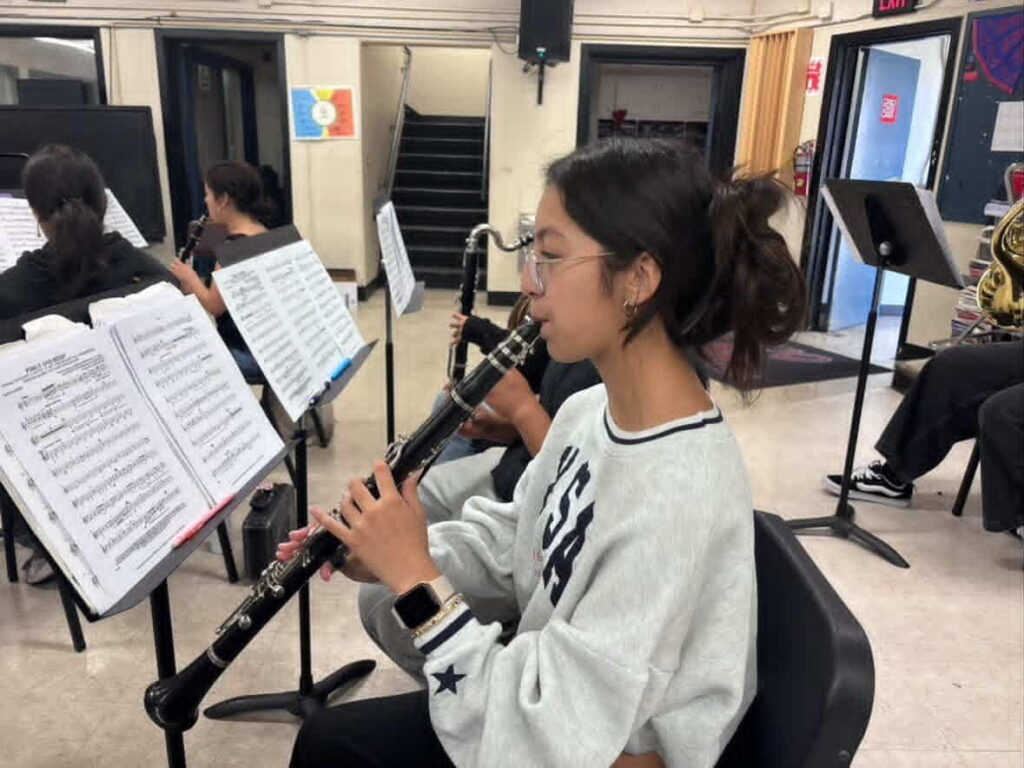
Top Takeaways
- The West Contra Costa Unified School District is preparing to make significant cuts to music, arts, theater and dance.
- Richmond High School’s music program went from seven students to over 200.
- An anonymous donor purchased $100,000 worth of instruments for the school in 2016.
When Andrew Wilke took over Richmond High School’s music program in 2014, there were seven participating students out of a school of more than 1,000. The music room, housed in a building built in 1953, had only a few creaky instruments, most of them decades old.
“It was next to nothing,” Wilke recalls. “It was some keyboards and a lot of garbage.”
Wilke, who grew up in the district, set out to rebuild the program by applying for grants and adding classes. In 2016, an anonymous donor purchased more than $100,000 worth of instruments for the school.
Today, more than 200 students play an instrument — many for the first time — an unusual number for a high school music program that typically requires years of prior experience. The music program includes an orchestra, jazz band, marching band and wind ensemble.
According to Wilke, it is the only Title 1 high school in Northern California — meaning it receives supplemental federal funding based on student need — to offer a program of this scope. In a district where a sizable number of students struggle with attendance and graduation, every student involved in the music program has earned a high school diploma, he said.
“To pick up an instrument and to find the motivation to stick with it even when it gets hard is a lot,” Wilke says. “It teaches you to continue to show up and develop rigor, to push through. Students enter a culture of succeeding and not giving up.”
Despite the program’s success, the West Contra Costa Unified School District is preparing to make significant cuts to music, arts, theater and dance, with up to 21 arts teaching positions on the chopping block. The reductions, approved earlier this year, will eliminate orchestra and band programs at all elementary schools as the district works to whittle down a $127.2 million deficit over the next three years.
“I foresee that our program will be affected by the cuts at the elementary schools because students won’t be able to learn their instruments until middle school,” said Jordyn Mader, another music teacher at Richmond High who works with beginning musicians.
‘I found something that I’m good at’
Like many teachers, Wilke’s plate is full. He teaches six classes a day. He fundraises for the music program and accompanies students on field trips and competitions. He also serves as a de facto counselor for his students as they navigate issues such as unstable housing, immigration crackdowns and community violence, in addition to typical teenager stuff like college applications and relationship drama.
“I’m trying to take care of these young people who are growing up in extreme adversity and make sure that they don’t die,” said Wilke. “If they’re not immigrants themselves, most of their parents are immigrants.”
About 89% of Richmond High students are Latino, 5% are African American and 41% are English language learners. At least 10% have been in the United States for less than four years. Given these demographics, Wilke works to incorporate pieces from Black and Latino musicians to make the music more relevant to his students.
Gerardo, 16, came to the U.S. in 2022 from Sinaloa, Mexico. When he walked into Wilke’s class, he didn’t speak much English and had never studied an instrument. Today, he plays oboe, double bass and tenor sax, and says that playing music helped him improve his English by having to listen to his teacher and watch video tutorials.
“I found something that I’m good at, and I’m not going to let it go,” Gerardo said. “I think my life would be kind of boring without music. This program takes me places and has already opened many, many doors for me.”
Richmond High School marching band.Credit: Courtesy of Andrew Wilke
Bella Mariscal, 18, who plays bass and flute at Richmond High, has long seen benefits in her own life.
“When I was younger, I had trouble focusing,” Mariscal said. She picked up the flute in the second grade and hasn’t looked back.
“When my mind wanders, music stimulates my brain and helps me control my thoughts and be calm,” she said. “When we’re all playing together, it’s like we’re talking to each other in a language that no one understands besides other musicians.”
Richmond High’s music program recently received a three-year, nearly $1 million grant from the city of Richmond that has helped pay for music coaches who work one on one with students. The funds have also subsidized field trips to competitions around the state, music camp and to Disneyland, where the marching band performed. Eighteen Richmond High students also recently had the chance to take part in a master class with a professional jazz ensemble from New York.
“This program is one of the main reasons I come to school,” said DJ Carradine, a 17-year-old who plays the saxophone. He plans to attend a local state university before transferring to a music conservatory. “I’m just attending my other classes because I have to graduate. But music is where I want to be,” he said.
With the district poised to cut up to 300 positions, including teachers and classified staff, Wilke and his students don’t know what to expect for the future of the music program. Many teachers are opting for jobs in other districts. Meanwhile, the music in Wilke’s band room keeps playing.
“A lot of my kids don’t have the expectation that they’re important and that they matter in their day-to-day lives,” said Wilke. “But when they come here, they realize that they’re a critical piece of the band, and we need every one of them. The responsibilities become much greater.”
EdSource is dedicated to covering in California and nationally. Other publications may republish EdSource articles, online or in print, at no charge, provided adherence to our guidelines. The embed code provided here includes a tracking pixel to enable us to measure the reach of our stories. It must be included in any online pickup of EdSource stories.
The following guidelines apply to all EdSource content, including stories, podcasts and video:
Editing stories: Trimming stories for length or adding additional localized reporting is allowed. However, if you wish to make material edits, please contact EdSource for approval prior to publication. Please reach out to Andrew and Smita at republish@edsource.org with questions.
Crediting EdSource: Authors and EdSource should be credited in the byline with a link back to the original article. (This is in the embed code. Please be sure to include it.)
Monetization: EdSource stories cannot be sold, but it’s OK to put EdSource articles on pages with ads.
Photos and graphics: Assets such as photos and graphics must be added manually. Photos taken by EdSource staff may be republished, but some images, such as those from third-party providers (Associated Press, iStock), may not be republished without permission or payment. Proceed with caution. You may also run your own photos with the EdSource story. On occasion, EdSource editors may be able to provide partners with embed codes for graphics or localized data. If you have questions, please contact us.
RSS Feeds: News organizations cannot systematically republish all EdSource articles via RSS feed or other mechanism.
Unsorted,Arts Education,Arts in Education,West Contra Costa Unified School District#Budget #deficits #threaten #Richmond #High #Schools #thriving #music #program1778483705

