

 wellnessfitpro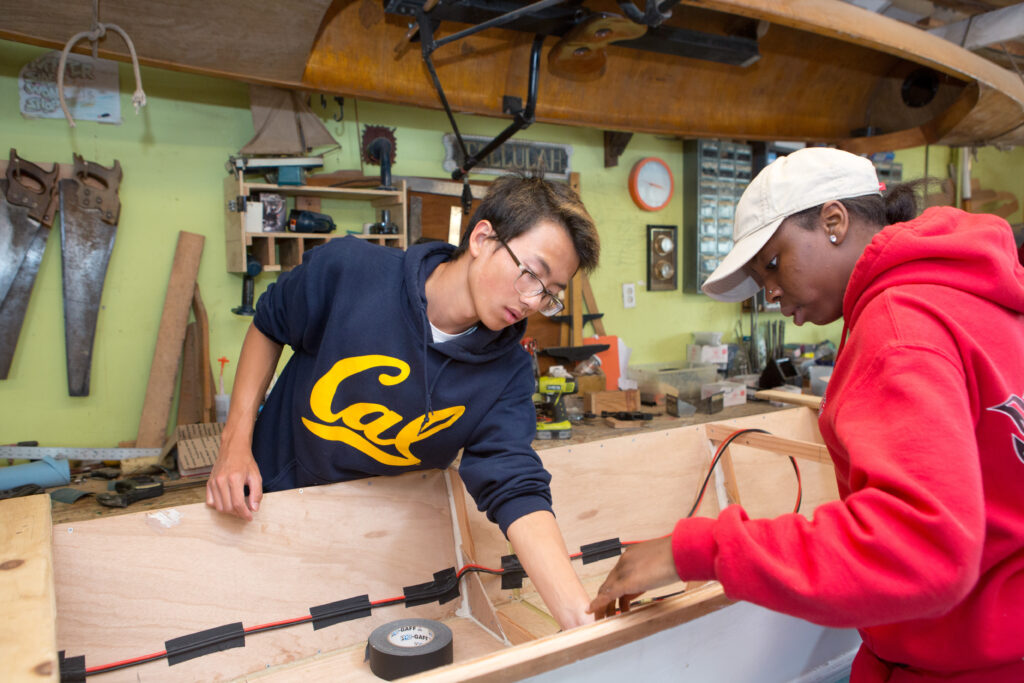

Credit: Allison Shelley for American Education
California stands at a generational crossroads. As Gov. Gavin Newsom proposes a historic $1 billion in ongoing funding via the proposed budget language for the California Community Schools Partnership Program (CCSPP), we have the opportunity to redefine the very architecture of how California’s youth transition from the classroom to the career with a sense of civic belonging and agency.
California has already made a monumental $4 billion investment in the community schools model. While this program has moved schools to redesign and reimagine their purpose, centering them in local neighborhoods as hubs of social service support, we believe it also marks an opportunity to do more, especially in these times of job insecurity and volatility for our youth and society at large.
To ensure California remains the fifth-largest economy in the world, we have an opportunity to more intentionally integrate career technical education (CTE) and workforce partnerships into the systemic architecture of middle and high schools.
For too long, career technical education has been treated as an “add-on”— a separate wing of the school or a secondary track for specific students.
But the modern economy doesn’t work in silos, and our secondary schools shouldn’t either.
To truly prepare students for a rapidly evolving workforce, we must move beyond isolated programs and toward a systemic architecture for success. The community schools partnership framework and proposed funding, built on its four foundational pillars, is the bridge we’ve been waiting for.
Workforce readiness is frequently derailed not by a lack of talent, but by life barriers. Under the first pillar, Integrated Student Supports, schools become hubs that address food insecurity, transportation and mental health. When a student doesn’t have to choose between a meal and a dual-enrollment certification, they stay on the path. This “whole-child” approach ensures that counseling isn’t just academic advising; it’s a career-aligned strategy that connects a student’s personal well-being with a viable economic future.
The second pillar, Expanded Learning Time and Opportunities, is the engine for work-based learning. By moving education outside the traditional 8 a.m.-3 p.m. window, we create the runway necessary for high-value industry certifications in fields like cybersecurity or nursing — programs that often require more hours than a standard elective block allows.
Furthermore, this space allows us to better prepare students to compete in an AI-disruptive world. For example, students can use AI agents to simulate iterative project management and complex problem-solving, mirroring the technical environments they will encounter in the Bay Area’s tech sectors and beyond.
The third pillar, Family and Community Engagement, shifts the role of local business owners from mere donors to co-educators. Regional employer partnerships, such as those seen in the Orange County Pathways model, provide a blueprint for this work. By inviting industry partners into the school ecosystem, we provide students with authentic networking and mentorship while the school becomes a reliable pipeline for a skilled local workforce grounded in student voice.
Finally, Collaborative Leadership and Practices ensures that workforce alignment is baked into the school’s DNA. By bringing together teachers, industry partners and higher-education liaisons or local community colleges, we can co-design curriculum centered on the student voice that stays current with regional industry needs. Using data-driven dashboards, leadership teams can track “durable skills” alongside technical competencies, ensuring our graduates are prepared for a future in which their skills, interests and talents are best matched with regional workforce needs.
As we look toward the final negotiations of the state budget, we urge the Newsom administration to prioritize the use of community school funding to support more integrated career technical education pathways. Aligning these historic investments with workforce development goals will help ensure that this billion-dollar commitment translates into meaningful career outcomes for students.
What makes this model truly revolutionary is the shift from a redistributive mindset to a predistributive one. Instead of trying to fix inequitable outcomes after graduation, we are designing schools from the ground up to provide systemic access to social capital and industry networks.
By integrating career pathways into the community schools framework, we ensure that equity is not an afterthought, but a core component of the daily student experience. The governor’s proposed $1 billion investment is not just a line item; it is a down payment on a California where every student, regardless of ZIP code, has a direct, supported link to the world of work.
It is time to stop treating “school” and “work” as two different worlds. Through the four pillars of community schools, we can build one cohesive journey toward prosperity for every Californian student.
Doug Wilson is chair, co-founder, and CEO of the National Talent Collaborative, which works to close the talent and opportunity gap in America by working in partnership with business and education in 35 large U.S. cities.
Kelly Cure, is vice president of public policy for the Bay Area Council. The council has been at the intersection of business and civic leadership, shaping the future of the Bay Area since 1945.
The opinions expressed in this commentary are those of the author. EdSource welcomes commentaries representing diverse points of view. If you would like to submit a commentary, please review our guidelines and contact us at commentary@edsource.org.
Commentary,Gov. Gavin Newsom,Unsorted,Career Technical Education#community #schools #bridge #gap #education #work1778560907

