

 wellnessfitpro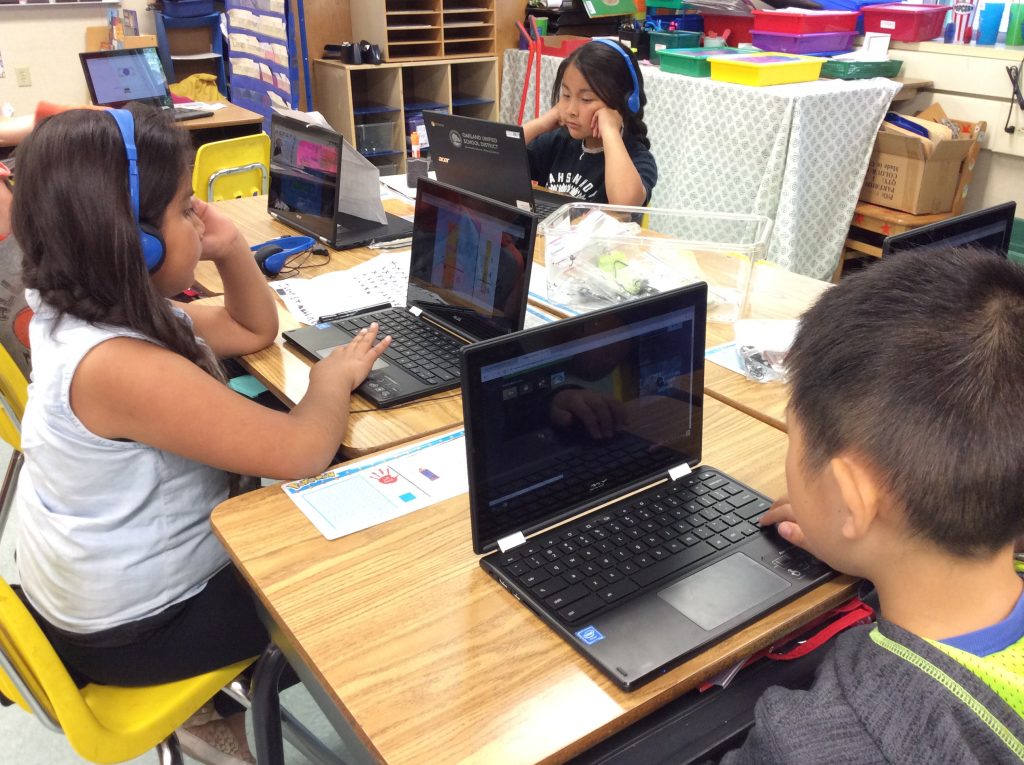
Top Takeaways
- Discussion included range of potential effects of screen use: developmental, physical, mental.
- Panelist urged broadening of discussion as AI may lead to lower screen time but increased tech use in near future.
- Suggestions from panelists included a framework for districts and case studies for teachers.
When Superintendent Bryan Easter recently bought printers for Maple School District classrooms, the goal was surprisingly simple: get younger students in class off screens more often by doing assignments by hand.
The Kern County district superintendent is among a growing number of education leaders, parents and students questioning whether too much screen time is hurting students’ attention spans, social development and ability to learn.
That conversation took center stage Wednesday during an EdSource roundtable on education technology.
The panelists – a student, parent, teacher, superintendent and researcher – discussed how to balance the benefits of technology against mounting concerns about screen addiction and other concerns for students’ wellbeing.
“Oftentimes, when I walk through my hallways, I see a lot of zombies, people just hunched over their phone, and to me, honestly, the dose is what makes the poison and what I mean by this is that technology itself is not inherently bad – but overuse without boundaries can really harm focus, mental health and learning,” said Rishaan Marwaha, a freshman? student attending Sage Hill School in Southern California’s Newport Beach.
Marwaha said he knows that the current job market requires “people skills, critical thinking, and communication, as well as collaboration,” and “schools should really start focusing on these skills and must use technology in ways that strengthen those human abilities instead of replacing them.”
How are educators, students, and parents approaching the conversation?
Some teachers and administrators are questioning whether too much screen time is hurting students, especially in early grades.
Maple School District, which serves transitional kindergarten through 8th, for example, has adopted guidelines that limit screen time for its youngest students and, in some cases, prohibit one-on-one devices altogether in early grades. The Los Angeles Unified School District recently approved a resolution that requires the district to come up with a policy? That will cap screen time by grade level and largely eliminate it for the students through first grade, with limited exceptions.
Panelist Julie Edwards said she wants her children to “have this condensed, concentrated period in their childhood development of developing attention span and frustration and tolerance and really leaning into the friction of learning to develop their brains,” said Edwards. She advocated for the LA Unified resolution as a parent of two elementary school students.
That “friction of learning,” she explained, means ensuring students have the ability to learn foundational skills before leaning on technology they are likely to encounter as they grow older.
Speaking about the potential impact of artificial intelligence programs, Edwards said of her children: “They need to make their own ugly drawings, write their own terrible papers, generate their own IP, before we put them onto something that will then make all of that happen in three seconds.”
Easter, the superintendent from Kern County, also questioned the use of reward systems in education technology for young children, noting that some programs reward students with coins or stars when they complete their assignments.
“Sometimes they can get through that content on a worksheet in six minutes, but they’re spending 20 minutes to earn that next coin, or that next status,” he said. “And so, from the perspective of an elementary school, we have to be careful about really what those programs are requiring of our kids when it comes to the time consumption, because of how they keep them engaged.”
Panelists also discussed some potential physical effects of increased screen time in classrooms
“I think that the long-term effects of being hunched over, staring at a computer screen for 190 days — it’s taxing both on teachers, and it’s taxing on students. So in my history class, I think that it all comes down to balance and comes down to structure,” said Nick Ward, an 8th-grade U.S. history teacher and athletic director at Oakland Unity Middle School in Oakland.
For Marwaha, the student panelist, “the cumulative effect of non-stop screen exposure” is a significant problem.
With technology being such a big part of young people’s lives, Marwaha said his classmates can spend almost the entire day switching tabs and processing digital information that’s not related to school as well.”
A case study in balancing technology in the classroom
Ward said technology helps his students research historical sources and collaborate on writing assignments. But he also tries to balance device use with offline learning strategies in his classroom, such as having students close their laptops during discussions and hand write outlines before drafting essays on computers.
“It’s breaking those screen times into small chunks, and before you know it, a 45-minute class has passed, and the kids have only had six or seven minutes on computer screens,” Ward said.
He recently piloted the use of artificial intelligence in his classroom by having his students “chat” with Andrew Jackson using Character AI, a program where users can interact with characters they create within the platform.
“It was students’ job to either challenge or confirm the AI’s response using primary sources on paper,” said Ward. “So, again, we were using the tech piece as a tool to analyze, as a tool to question, but the burden of thought was still very much on students and not the tech tool.”
Is the amount of screen time the right question?
Chris Agnew, director of the Generative AI in Education Hub at Stanford University’s SCALE Initiative, said it is good to question screen use in classroom instruction. But if that conversation is contained to addressing screen time alone, it would neglect the reality that technology continues to evolve.
“Speech-to-text and text-to-speech through artificial intelligence is rapidly expanding, and there is a world in the near future where we actually significantly decrease our use of screens because we’re interacting with artificial intelligence through voice, because it is so powerful,” he said. “If our only mechanism for moderating technology use is a screen proxy, we might see a world where our interaction with technology actually increases from where it is today but our screen use has gone down.”
He said the conversation about education technology should move beyond screen time alone and focus more broadly on what society wants students to gain from learning experiences.
“We should be asking: What do we want for our kids, and what are the learning experiences we want for our kids, and what gets us there?”
Edwards, the parent of two young students, similarly argued that schools need to be more intentional and specific about how and when technology is used in classrooms.
“I didn’t have a smartphone until I was 33 years old, for instance, but I’m managing in this future that’s now that’s pretty wild, and very different than what I experienced most of my life and through all my developmental years,” said Edwards.
“So, I think it’s great to teach the tools; it’s great to have them get fluency with the technology, but we really need to lean into figuring out exactly when, exactly what, and exactly how.”
Unsorted,Artificial intelligence (AI),Schools Beyond Screens,video,video-homepage#schools #teachers #approach #screens #schools1778781074

