

 wellnessfitpro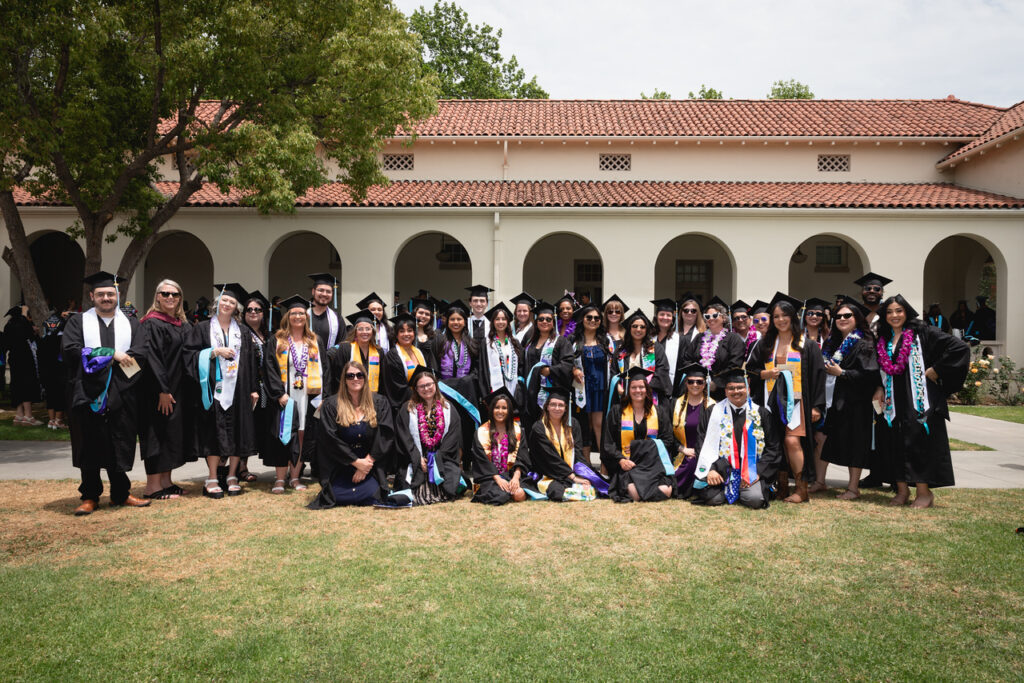
A less frequently talked about impact of the Covid pandemic was the rapid decline in the number of new TK-12 teachers earning the credentials needed to enter the classroom. In California, the annual supply of newly credentialed teachers plummeted by 26% between 2021 and 2023.
This could have had a profound and lasting impact on our schools because a qualified, well-prepared teacher is the single most important in-school factor for improving student outcomes, particularly in high-need communities.
But, at about the same time, California policymakers were taking bold action. Then-Assemblymember, now-Speaker Robert Rivas authored a bill to establish the Golden State Teacher Grant. The goal was simple: to provide direct financial assistance to candidates who commit to teaching in our high-priority, low-income schools.
Five years later, the results are in: For the second year in a row, the number of educators earning credentials is rising. Data from the California Commission on Teacher Credentialing on teacher supply in California shows that as of 2025, we are finally back to pre-pandemic levels of approximately 20,000 new credentialed teachers annually.
This is not a stroke of luck; it’s a return on investment.
Emergency credentials are a crisis-management tool that only begets more crises, especially when they lead to higher burnout, lower student achievement, and ultimately cost the state more when those teachers leave within 18 months.
Over the past five years, California has invested in expanding the teacher pipeline. Some of these investments, like the Golden State Teacher Grant, provide tuition support so that the cost of entry isn’t a barrier. Others, like the Teacher Residency Grant Program and the Student Teacher Stipend Program, compensate candidates while they train.
The best programs recognize that recruiting directly from the community served by the schools and providing rigorous classroom teaching experience before becoming a teacher of record result in teacher effectiveness and retention.
Last week, we learned that the $570 million invested by the state since 2020-21 in the Golden State Teacher Grant program will be exhausted in the next few months. The governor’s new budget proposal would only allocate $16 million annually and only for special education teachers. This lower level of funding would only support, annually, about 13% of the teacher candidates we are reaching today. A critical part of the teacher pipeline the state has built with these funds is now at risk of faltering, and California cannot afford to go backward.
The pull to pivot back to cheaper shortcuts — like emergency credentials — just to ensure there is an adult in every room is a false, short-term economy. The most recent Getting Down To Facts III review underscores this.
Emergency credentials are a crisis-management tool that only begets more crises, especially when they lead to higher burnout, lower student achievement, and ultimately cost the state more when those teachers leave within 18 months.
Now is the time for districts to take stock and double down on what talent strategies are resulting in a true return on investment. Districts should be strategically using the resources provided by the state’s Local Control Funding Formula and federal funding streams to support effective, sustainable, long-term teacher talent pipelines. But the state has a critical role in supporting the tuition costs of earning a teaching credential, especially for teachers choosing to work in low-income school communities.
California’s policymakers deserve credit for the bold bets of the last five years. They have successfully reversed a destabilizing trend — one where TK-12 students were left without teachers or taught by teachers without credentials.
Now, the task is to align our available resources with strategies that enable districts to sustain the progress they are making in developing long-term teacher talent management strategies. This is what works for students, teacher candidates and the state’s bottom line.
High-quality teachers are the single most important in-school factor for student success, and their impact is particularly transformative for students from low-income backgrounds. A great teacher can not only improve a student’s test scores but also fundamentally alter their educational trajectory, leading to higher rates of high school graduation, college attendance, and ultimately, greater lifetime earnings and social mobility.
The stakes are also financial: Every teacher who leaves the classroom costs districts about $25,000 in recruitment and hiring costs to replace them. Because well-prepared teachers stay in the profession longer, the state’s upfront investment in quality training pays for itself by slowing the revolving door of teacher turnover.
Investing in a strong, stable and diverse teacher workforce is an investment in California’s future economy, directly propelling the next generation into higher-wage careers and reducing cycles of intergenerational poverty.
In a constrained budget environment, the most expensive thing California can do is stop investing in supporting a highly qualified teacher workforce that is prepared to commit to the profession for the long term.
•••
Heather Kirkpatrick is president and CEO of Alder Graduate School of Education, a community-based professional workforce development pathway that works with public TK-12 school systems across California. Alder GSE places teacher residents in the communities where they were trained.
The opinions expressed in this commentary represent those of the author. EdSource welcomes commentaries representing diverse points of view. If you would like to submit a commentary, please review our guidelines and contact commentary@edsource.org.
EdSource is dedicated to covering in California and nationally. Other publications may republish EdSource articles, online or in print, at no charge, provided adherence to our guidelines. The embed code provided here includes a tracking pixel to enable us to measure the reach of our stories. It must be included in any online pickup of EdSource stories.
The following guidelines apply to all EdSource content, including stories, podcasts and video:
Editing stories: Trimming stories for length or adding additional localized reporting is allowed. However, if you wish to make material edits, please contact EdSource for approval prior to publication. Please reach out to Andrew and Smita at republish@edsource.org with questions.
Crediting EdSource: Authors and EdSource should be credited in the byline with a link back to the original article. (This is in the embed code. Please be sure to include it.)
Monetization: EdSource stories cannot be sold, but it’s OK to put EdSource articles on pages with ads.
Photos and graphics: Assets such as photos and graphics must be added manually. Photos taken by EdSource staff may be republished, but some images, such as those from third-party providers (Associated Press, iStock), may not be republished without permission or payment. Proceed with caution. You may also run your own photos with the EdSource story. On occasion, EdSource editors may be able to provide partners with embed codes for graphics or localized data. If you have questions, please contact us.
RSS Feeds: News organizations cannot systematically republish all EdSource articles via RSS feed or other mechanism.
Commentary,Gov. Jerry Brown,Local Control Funding Formula (LCFF),School Finance,State and Federal Policies,Teachers and Admin,Unsorted,Alder Graduate School of Education,California Commission on Teacher Credentialing,Golden State Teacher Grant,Robert Rivas#Californias #high #ROI #investment #teacher #pipeline #paying #risk #faltering1779169791

