

 wellnessfitpro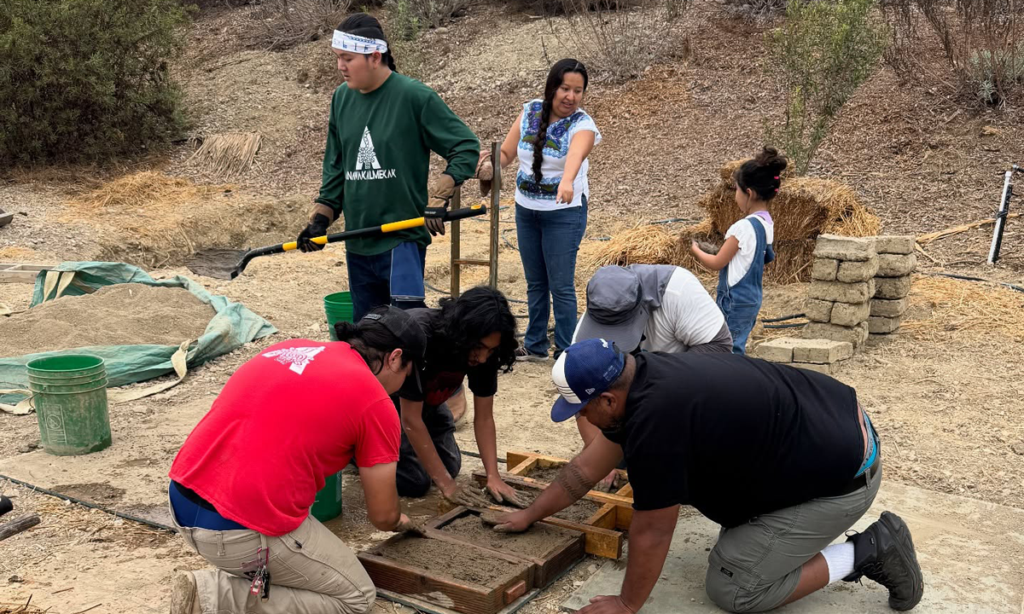
When Defense Secretary Pete Hegseth reportedly said, “I only speak American” during a meeting of world leaders with Secretary of State Marco Rubio, it was meant to draw a line — between who belongs and who doesn’t.
But there’s a deeper irony.
Long before English was spoken on this continent, hundreds of Native languages were. There is no single “American” language. There never has been.
From Cherokee and Diné to Gabrielino-Shoshone and Yurok — and the many Indigenous languages carried north from Mexico and Central America — Native languages are American languages. They were spoken here before the United States existed. They survived colonization, boarding schools and federal policies explicitly designed to erase them.
Today, when someone says, “I only speak American,” what they usually mean is English. But English has never defined Americanness. America’s story is multilingual.
Yet our education system doesn’t reflect that truth — especially for Native American students.
In California, lawmakers recently acknowledged Indigenous language disparities in public health through Senate Bill 1016, the Latino and Indigenous Disparities Reduction Act. The state will now require more detailed tracking of Latino and Mesoamerican Indigenous identities and languages in its health data systems. This recognizes that Indigenous communities are often misidentified, undercounted and underserved.
Now education must catch up.
There is no single ‘American’ language. There never has been.
While California voters passed Proposition 58 in 2016 to expand multilingual education — explicitly including Native American languages — that promise remains largely unrealized.
There are already examples in California that demonstrate how language is treated as central to education. Anahuacalmecac International University Preparatory in Los Angeles was founded as a community response to assert linguistic self-determination, integrating Spanish and Nahuatl into instruction across subjects alongside English. Authorized by Chief Vera Rocha of the Gabrielino-Shoshone Nation of Southern California and then by the Los Angeles Unified School District as a public charter school, the school does not treat Indigenous languages as optional offerings, but rather as core languages of learning, culture and community. Since 2012, it has also developed Nahuatl courses that meet University of California A-G requirements — still a rare example of an Indigenous language embedded within a college preparatory pathway.
This work shows integrating Indigenous languages into mainstream public education is both doable and academically rigorous.
A coalition of Native educators and advocates is drafting what they call the Native Language Revitalization and Immersion Act — a proposal that would establish a pilot Tk–12 Native language immersion school in California. Future schools modeled after this pilot would offer core academic instruction in Native languages while meeting state standards and preparing students for college eligibility. Assemblymember James Ramos is advancing new legislation (Assembly Bill 1581) to update California’s archaic and inconsistent ways for students to self-identify their tribal identities.
The proposal would also formally recognize “American Indian Language learners” in the state’s accountability system and create a defined funding pathway to make these schools viable in urban, rural and tribal communities.
This is about equity and student success.
Federal research and decades of educational data show that students perform better when their first language is respected and integrated into instruction. Engagement increases. Persistence improves. Academic outcomes rise.
Native language immersion is not a retreat from academic rigor. It is a strategy to achieve it as defined by tribal educational self-determination. Yet without comprehensive and concerted action, Native languages — and the rich cultural lifeways and Indigenous knowledge embedded in these languages — may disappear. Nationally, tribal leaders and educators acknowledge the urgency of the language crisis, noting that by 2050, fewer than 20 Native languages may still be in use in the continental United States.
Critics may argue that English unifies us. But unity has never required erasure.
What makes someone American is not the language they speak, but their participation in our civic life. Multilingualism has always been part of that life. German newspapers once thrived in the Midwest. Spanish predates English in large swaths of the Southwest. Native languages are the oldest languages of this land. They are not foreign. They are Indigenous. In California, American Indian language diversity should be not only be celebrated, but consistent with federal law under the Elementary and Secondary Education Act. California must recognize how its public school systems can begin to meet the trust obligation to “maintain, protect, and promote the rights and freedom of Native Americans and Alaska Natives to use, practice, maintain, and revitalize their languages, as envisioned in the Native American Languages Act (25 U.S.C. 2901 et seq.)”.
California has an opportunity to lead by ensuring its schools reflect that truth — not only symbolically, but structurally and in alignment with federal law upholding each tribe’s sovereign right to educational self-determination. Supporting Assemblymember Ramos’ legislation through AB 1581 is a critical first step.
The Native Language Revitalization and Education Act is still a draft. It needs a legislative champion. It needs public support. It needs a broader conversation about what language justice looks like in the classroom. But it begins with a simple premise: Native languages are not outside of America. Indigenous Peoples from across the Americas make California their home, and like all Native children, those of Mesoamerican Native Nations also have the right to freely live, learn and dream in their mother and heritage languages. If we are serious about equity, belonging and educational excellence, our laws should say so.
And our schools should, too.
•••
Marcos Aguilar is a co-founder of Anahuacalmecac International University Preparatory of North America (www.anawakalmekak.org), an Indigenous public charter school in Los Angeles dedicated to community-based education, cultural revitalization, and environmental stewardship. For more on his advocacy efforts, go to https://tzicatl.org/.
The opinions expressed in this commentary are those of the author. EdSource welcomes commentaries representing diverse points of view.
EdSource is dedicated to covering in California and nationally. Other publications may republish EdSource articles, online or in print, at no charge, provided adherence to our guidelines. The embed code provided here includes a tracking pixel to enable us to measure the reach of our stories. It must be included in any online pickup of EdSource stories.
The following guidelines apply to all EdSource content, including stories, podcasts and video:
Editing stories: Trimming stories for length or adding additional localized reporting is allowed. However, if you wish to make material edits, please contact EdSource for approval prior to publication. Please reach out to Andrew and Smita at republish@edsource.org with questions.
Crediting EdSource: Authors and EdSource should be credited in the byline with a link back to the original article. (This is in the embed code. Please be sure to include it.)
Monetization: EdSource stories cannot be sold, but it’s OK to put EdSource articles on pages with ads.
Photos and graphics: Assets such as photos and graphics must be added manually. Photos taken by EdSource staff may be republished, but some images, such as those from third-party providers (Associated Press, iStock), may not be republished without permission or payment. Proceed with caution. You may also run your own photos with the EdSource story. On occasion, EdSource editors may be able to provide partners with embed codes for graphics or localized data. If you have questions, please contact us.
RSS Feeds: News organizations cannot systematically republish all EdSource articles via RSS feed or other mechanism.
Commentary,Languages,Race, Ethnicity,Unsorted,Bilingual Education,Native American,Proposition 58#speak #Native #American1779430683

