

 wellnessfitpro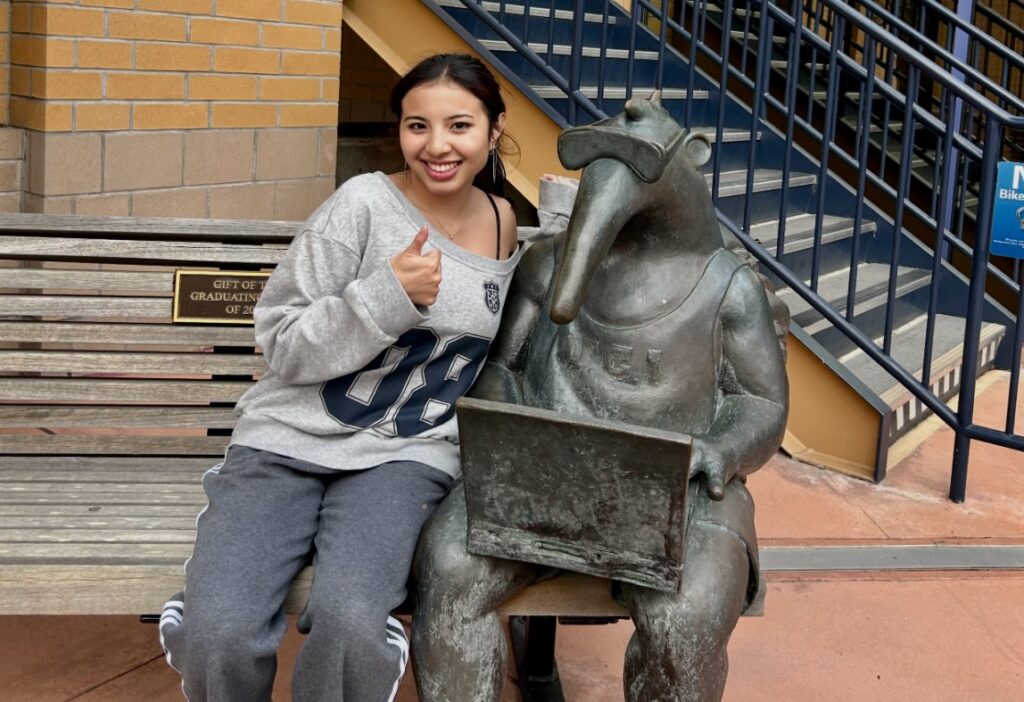

Amelia Angeles, UC Irvine
Ever since I built my first Lego Friends set in elementary school, I thought I was destined to become an engineer. My mom suggested that I pursue that path when she saw my love for building Legos, and that I consistently scored above grade level in my math and science placement tests.
On car rides to and from school, my mom gave me pop quizzes on my multiplication tables. When we went shopping, she paid in cash, and I raced against the cashier to calculate the remaining change, blurting out the answer before the receipt printed. In school, classmates slid their math worksheets onto my desk, asking questions about problems they struggled with.
As a freshman in high school, I was placed into Algebra II — a class typically taken by juniors. My schedule quickly filled with AP courses, most of them in STEM. One summer, I job shadowed a civil engineer and took an electrical engineering course, where I built and programmed a small robot I named “Sir Bertram.” But somewhere in between walking construction sites and sodding circuits, I became interested in a different side of engineering.
When I started at UC Irvine, I was a biomedical engineering major. I enjoyed AP biology in high school, and merged that interest with engineering. But when I took my first BME class, it wasn’t what I expected.
Instead of building prosthetics or programming robotic arms, I was researching patents and attending lectures about cardiovascular diseases. For my final project, I worked with three other students to write a research paper about heart valve replacements, spending hours sifting through patents and blueprints. The deeper I got into biomedical engineering, the more I dreaded it.
Spending years on one project, stuck in a lab with the same small group of people, was not how I wanted to spend my working life. I wanted to juggle multiple projects at once, travel and meet a plethora of people.
By the end of my first quarter, I had come to the realization that paralyzed me with fear. I didn’t want to be an engineer.
After multiple meetings with career advisers, I decided that the communications field aligned with my career goals. But UCI doesn’t have a communications major, so I chose something adjacent to it. In my junior year, I switched my major to literary journalism.
When I told my parents, my mom asked if I’d still be able to graduate on time. When I reassured her that I could, she offered nothing but support. My dad hesitated.
“Your whole life, I’ve seen you want to be an engineer,” he said. “Are you sure you want to leave that behind?” But after sensing my resolve, he told me that he believed I could adapt.
Secretly, I shared his concerns. I tossed and turned at night, worried that pursuing journalism meant abandoning the part of me shaped by STEM.
When I took my first journalism class, I was shaking in my 4-inch black leather go-go boots.
I’d spend hours writing a draft, only to delete and rewrite most of it the next day. I spiraled over never feeling fully finished with a piece, missing the clear-cut solutions I was used to back in STEM. During my first round of peer reviews, I envisioned my paper riddled with critiques from my peers and professor telling me I wasn’t good enough. The thought made my stomach turn.
My first few drafts came back with multiple marks in the margins, asking me to “show, not tell,” and AP-style corrections scattered across the page. But there were also passages highlighted, with comments saying “I like this!” or “Great job!” After writing workshops, classmates asked me how I structured my story or for advice on how to approach sources for an interview.
With each annotated draft and conversation after class, I became more confident. Although I still struggle with impostor syndrome, my peers and professors have never made me feel like one.
Did I completely abandon my STEM identity? No. When I pay in cash, I still calculate the remaining change in my head. When my younger sister struggles with her math homework, I’m still the first person she calls for help. Sir Bertram still sits in the corner of my closet.
But do I feel more fulfilled now that I’ve found something else I enjoy just as much?
Absolutely. I was invited to the Magic Castle in Los Angeles, the most prestigious magic club in the world, because I wrote a profile on one of their magicians. I’ve met people in my journalism classes who I’ll be friends with forever. I was even accepted into the EdSource Student Journalism Corps, and got my first article published earlier this year.
For those of you afraid of taking a different path in college, or even in life, I encourage you to take that leap. You don’t have to lose yourself in the process — you might just find a more complete version.
Amelia Angeles is a fourth-year literary journalism major at UC Irvine and a member of the EdSource California Student Journalism Corps.
•••
The opinions expressed in this commentary represent those of the author. EdSource welcomes commentaries representing diverse points of view. If you would like to submit a commentary, please review our guidelines and contact us at commentary@edsource.org.
Unsorted#switched #STEM #humanities #middle #college #career1780910536

