

 wellnessfitpro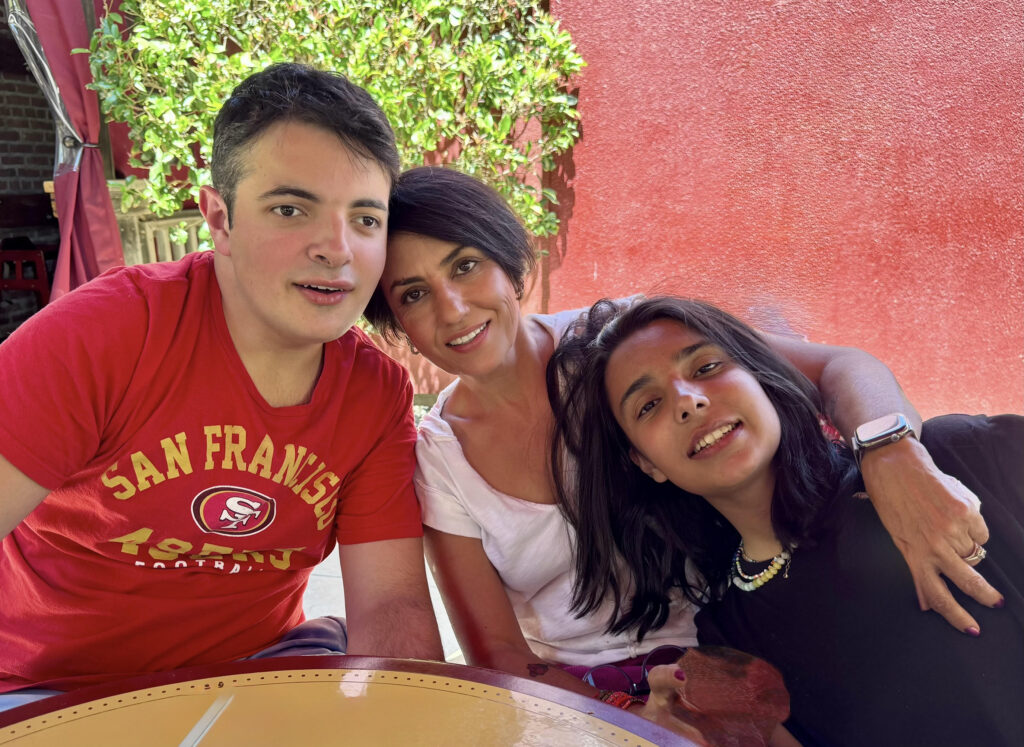
Top Takeaways
- School districts in California pay for students with disabilities to attend “non-public schools,” specialized private schools where they can get their needs met — often outside district boundaries.
- Some parents advocate for districts to operate their own local non-public schools to reduce commutes and improve the students’ quality of life.
- Oakland Unified is pursuing a local nonpublic school for the first time.
Lillian Ansari’s daughter, Atrina, endured two years of hourslong commutes from Oakland to Marin to attend her nonpublic school.
Cars provided by Oakland Unified School District shuttled Atrina, then 12, across the busy Richmond-San Rafael Bridge for school commutes that could take up to four hours. One such drive left Atrina, who has tuberous sclerosis complex, autism and epilepsy, “a mess when she got home,” her mom said, recalling her daughter’s tendency to freeze up after disruptions to her routine.
The 100 or so Oakland students who attend nonpublic schools are left with no other option than to commute outside their district’s boundaries because no such schools exist in the city. Students are placed in these private schools by the district, which are specialized for students with disabilities, where they receive tailored support for behavioral learning.
But now, for the first time, Oakland Unified is moving to help create a local nonpublic school option — an effort that could spare students with disabilities from lengthy commutes across the Bay Area and save money for the district.
Jennifer Blake, head of special education at Oakland Unified, said the district has contemplated opening a nonpublic school, or NPS, since 2019. This marks the first time OUSD has formally issued a request for proposal, inviting NPS contractors to apply to lease district facilities.
Partnering with an NPS could be a win for both the district and families, Blake said. She pointed to a model used by Seneca Family of Agencies and West Contra Costa Unified School District, in which Seneca operates an NPS in a WCCUSD-owned facility at a reduced cost while reserving seats for local students. Blake said OUSD hopes to create a similar arrangement that prioritizes Oakland students through benefits such as enrollment preference or reduced free tuition.
Going Deeper
Students in Oakland who have NPS placements are scattered across the Bay Area, with 102 students now placed across 20 schools, Jennifer Blake said. Once the school is up and running, the district will speak with families to consider location changes from other NPSes that are far from Oakland. They will also consider it as a potential placement option for new referrals if the needs of the student are well-matched to the school.
No single NPS fits all. The Helix School in San Rafael, for example, specializes in serving autistic children and those with related developmental challenges, while the Bayhill School in Berkeley specializes in serving students with learning disabilities like ADHD and dyslexia.
NPS placements are approved and funded when a school district determines it cannot adequately serve a child with disabilities, or when families can prove that a specialized private program would better meet their child’s needs. Ansari, whose son also attended a nonpublic school, said securing those placements through OUSD was time-consuming and exhausting.
Ansari’s son, now 21, has autism and dyspraxia. He attended OUSD schools through fifth grade, where Ansari said he often “masked” — suppressing behaviors associated with autism to fit in socially. Teachers often told her he was doing well, she said, but at home he would collapse from anxiety and stress.
“He wasn’t acting out, and in their eyes, he was fine, he was OK, because he wasn’t flinging chairs across the room,” Ansari said.
When Ansari and her husband asked the district for additional support, she said her son’s individualized education program, or IEP, team told them he was fine as long as he could access his education. The family then began searching for a private placement and found Springstone School, an NPS in Lafayette.
During a campus visit, Ansari recalled her son turning to her and saying, ‘Mommy, pinch me, I can’t believe it. These kids are all like me here.’ ”
Related Reading
L.A.’s special education parents constantly advocate — and students still feel unsafe at school, survey finds
May 6, 2026
That sense of belonging became a deciding factor for the family, Ansari said.
“As an adult, I want to be with people that get me,” she said. “I want to be among my peers. Why would I want less for him?”
Nonpublic school placements typically begin with the IEP process. If an IEP team — usually made up of family members, a general education teacher, a special education teacher, a district administrator and at least one other person — determines a student cannot get a free appropriate public education, the team may recommend an NPS placement.
Parents can still request an NPS, even if the IEP team does not recommend one. This is what Ansari and her husband did. She said the district rejected their Springstone placement request. Tuition at the school starts at about $36,000 a year, relatively low for a Bay Area NPS.
“Their language they were using and the way they were treating us was like, are we still talking about my kid, or are we negotiating buying a used car,” Ansari said. “It really felt like it just comes down to the money.”
After the district denied their request, the Ansaris faced a choice: keep their son in public school or pay for Springstone School themselves. They chose to enroll him at the school and hired an attorney.
Over the next six months, the family gathered evidence showing their son was doing significantly better at Springstone. Ansari said the district ultimately approved the placement through his IEP. A few years later, the family went through a nearly identical process with their daughter.
Jennifer Blake, head of special education at Oakland Unified District, said she could not comment specifically on Ansari’s case but pushed back on the idea that families must fight the district for NPS placements. “If data show a student’s needs cannot be met in a public school setting,” she said, an IEP team should carefully consider an NPS placement.
Going Deeper
NPS placements can be very expensive for public school districts, and Blake said OUSD is projected to spend $12.1 million for the 2025-26 school year placements. Each student placed in an NPS costs a base sum of around $116,000 annually, Blake said, which doesn’t include costs for such things as occupational or other therapies. That can bump full tuition to $200,000 to $250,000 a year.
If a student gets a placement approved through OUSD, there’s also the cost of transporting students to and from their schools, which the district is legally required to do under the Individuals with Disabilities Act. Blake said these can run between $20,000 and $50,000 a year for each NPS student.
If the district partnered with an NPS to have a school in Oakland, Blake said the district is hoping to negotiate some reduction in daily transportation rates for students in exchange for the reduced building price. Many students would also have shorter transportation routes, she said.
“We would be able to successfully and safely get more students in a vehicle because they’re now driving 15 or 20 minutes down the road instead of an hour and a half,” Blake said.
Free and appropriate education
Funding for special education has long been a challenge. Under the Individual with Disabilities Education Act, passed in 1975, the federal government pledged to cover about 40% of the cost of educating students with disabilities. Karma Quick-Panwala, director of children and family advocacy services with the Disability Rights Education and Defense Fund, said that today the government only pays around 13% of the cost, leaving districts struggling to fully fund services.
“But that is not an excuse under the law, unfortunately,” Quick-Panwala said. “So we need to look at how creative can we be to resolve disputes at the local level.”
Anjanette Pelletier, a special educator for 25 years and director of management consulting services at the School Services of California, said parents across California often struggle to secure nonpublic school placements for their children.
One challenge, she said, is a statewide shortage of placement options for students with more intensive support needs. “Sometimes the delay [in placement] is not that we disagree,” Pelletier said. “It’s that we can’t find a spot.”
Pelletier said another source of conflict is that parents are focused on what they believe is best for their children, while districts must follow strict legal requirements about what services and placements they can offer — and when they can offer them — even in cases when it’s clear a child would benefit from an alternative placement.
“Sometimes, where the gap happens is when parents say, ‘I’ve been trying to get into a nonpublic school or this specific setting,’ and the district says, ‘We’re obligated to try these other things first,’ ” Pelletier said. “It’s a very frustrating process for families, and often for the staff of classrooms, too.”
Part of those legal obligations under the Individuals with Disabilities Education Act involves educating students in the least-restrictive environment, which typically means a general education classroom whenever possible. According to Quick-Panwala, California data show that 60% of students with IEPs spend at least 80% of their school day in general education settings. Research has found that students with disabilities often perform better academically and socially when educated alongside nondisabled peers, she added.
“And then vice versa, our nondisabled students are learning more about how to navigate many different diversities and intersections,” Quick-Panwala said. “We want to see our public schools embrace educating students with disabilities in general education classrooms, and providing them with the support and services they need there.”
Sara Mohn and her daughter, Ila Mohn, sitting together in the living room of their Oakland home.Credit: Caly Luna Plowman
IEP services: denials, delays and attorney involvement
Quick-Panwala previously helped Bay Area families secure NPS placements through her work at the Community Alliance for Special Education. She said it’s “not uncommon to see denials or delays in getting the appropriate support and services,” adding that many Bay Area families seek legal help to obtain NPS placements. The high cost of tuition can contribute to district resistance, she said.
Sara Mohn is a parent who sought legal help to secure a NPS placement for her daughter through OUSD. Mohn’s daughter, Ila, now 18, has attended Star Academy in San Rafael since middle school. The school specializes in supporting students with learning disabilities such as severe dyslexia. Before that, Mohn and her husband paid about $25,000 a year to send Ila to a private elementary school without OUSD’s support.
Around fourth grade, the family reconsidered a public school and asked OUSD to reevaluate Ila for the first time since she was 5 years old. Mohn said the new assessment showed significantly lower scores than her earlier evaluation, which raised concerns for the family. They eventually paid $6,500 for an independent evaluation and requested an NPS placement through the district.
The process, Mohn said, was expensive, time-consuming and frustrating.
“I was on the other side of the table than the district,” Mohn said. “My kid wasn’t at the center of the decision-making.”
Mohn said families’ experiences often depend on the IEP team involved. She said she knows another Star Academy family whose placement process through OUSD was smooth because their team was thoughtful and supportive.
Blake said she could not comment specifically on Mohn’s case, but noted that the “data-driven recommendations” made by IEP teams do not always align with what families want for their child. She added that the district offers an alternative dispute resolution facilitator to work with families of students with IEPs.
According to Blake, the facilitator has helped resolve many disagreements without attorneys or formal legal action. This school year, the district received 38 requests for facilitation services. Of those, 19 were resolved without escalation, 12 remain in progress and only one advanced to a due process complaint, which typically results in a “resolution session” between the parents and the district, and sometimes even a formal hearing.
An NPS in Oakland
Two years ago, the Ansari family moved across the Bay to the Novato Unified School District so Atrina could live closer to her nonpublic school. Now her commute is no more than 45 minutes, one way, and Ansari said the change has significantly reduced stress on the family, “at least to not have a bridge between us.”
Ansari said opening a nonpublic school in Oakland could not only shorten students’ commutes but also help them build friendships and stronger community connections. Because many students travel from across Northern California to attend Bay Area NPS programs, she said, her children do not have close friendships with their classmates.
“A lot of times we don’t even know the other families,” Ansari said. “In public schools, the families end up being friends — they’re all going to after-school activities and going on vacation together … So having a school in the community would hopefully support that being able to meet after school or have more family engagement.”
At Star Academy, Ila Mohn said she feels comfortable and safe. On a Friday afternoon in March, Ila and her mother sat in the living room of their Oakland home, each holding a fluffy cat as the sun set through the tall windows behind them.
“Do you, at your school, feel like you have a sense of belonging there?” Mohn asked her daughter.
“It’s my house — it’s my home,” Ila replied before correcting herself. “No, well, here’s my home.”
“But it’s your home away from home,” her mother said. Ila nodded, “Yeah.”
Related Reading
New bill proposes reforming special education by empowering California families
March 26, 2026
Special education experts urge California schools to invest in early education amid rising costs
March 27, 2026
Special education has become a flash point in negotiations with teachers
February 24, 2026
Unsorted#years #crossBay #commutes #Oakland #Unified #moves #bring #specialized #school #closer #home1780301796

