

 wellnessfitpro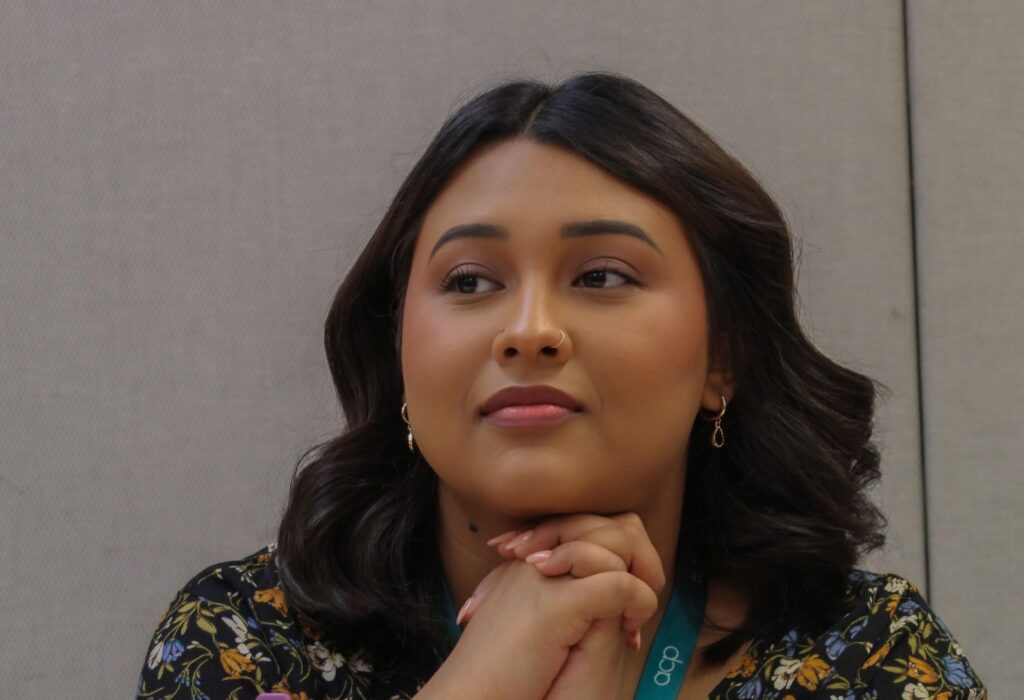

Andrea Baltadano
Courtesy of Andrea Baltadano
As an asylum seeker from Nicaragua, Andrea Baltadano’s college journey has been anything but typical. Under an increasingly repressive political regime back home, coupled with being a student journalist and protester, she found herself scared of being on the receiving end of retaliation from a government not known for protecting its citizens.
With few options, she left her home country in April 2024, immigrating to the United States and putting her goal of completing a journalism degree on the back burner. Given her vocal opposition to the government, Baltadano knew that returning to Nicaragua was improbable. However, she hoped to return to school in a safer place.
That time came in August 2024.
Baltadano, who has family in California, was encouraged to apply for humanitarian parole under President Joe Biden’s plan to create legal immigration pathways for up to 30,000 immigrants per month from Cuba, Haiti, Nicaragua and Venezuela. Following her arrival in the United States, she began applying for asylum.
After settling with her aunt in the Central Valley, Baltadano enrolled at San Joaquin Delta College, where she joined the journalism program and became a staff reporter and eventually editor-in-chief of the college’s paper, The Collegian.
Excited and hopeful for the future, Baltadano recently received an acceptance letter from Sacramento State, where she will transfer in the fall to major in political science and journalism.
“I’m really happy and thankful to be here, but if I had the chance to stay in Nicaragua and fight for my country and make it better — without my life, my security or my family being threatened — I would have stayed there,” Baltadano said.
While technically not undocumented, being an asylum seeker has complicated her transfer process. She’s not alone. Across California, undocumented students and asylum seekers must navigate additional hurdles.
There is no federal law requiring students to state their immigration status on college applications; they can still be admitted to schools without a Social Security number. Yet this leaves some benefits, such as federal financial aid, off the table. Immigrants, such as Baltadano, are still eligible for certain state aid programs if they’ve completed three years of attendance or the equivalent credits in California schools.
For Baltadano, the choice was simple. She hoped to be eligible for state aid programs for immigrant students.
“I gave my immigration status … so they could tell me what kind of financial aid I could apply for,” Baltadano said.
The status of her asylum application has put her in limbo, making her ineligible for federal financial aid. Baltadano doesn’t qualify for assistance under the California Dream Act because she has not met the attendance requirement for a nonresident exemption under Assembly Bill 540.
While living in California has made her feel safer disclosing her status, even with President Donald Trump’s crackdown on immigration, she understands that is not the case in other states.
“I feel very sheltered, and I feel very protected in California because it’s … a sanctuary state,” Baltadano said.
Since his inauguration in 2025, Trump has ramped up immigration enforcement. In August 2025, the State Department revoked more than 6,000 visas for international students, citing concerns about “violations of U.S. law and overstays.” The Department of Homeland Security also rescinded long-held guidance limiting immigration enforcement in “sensitive” areas, such as schools.
Baltadano says that orders like these are upsetting, considering the circumstances that lead many immigrants to leave their home countries in the first place.
“Most of us are not here because we want to be here or because we just woke up and said, ‘Oh, let me start again in another country,’ ” Baltadano said. “Most of us carry stories and other situations that have influenced us to leave the country that we know.”
Baltadano hopes to become a political reporter, inspired by the circumstances in the United States and back home in Nicaragua.
“I love this country so much. I want to sit here and make it better, and it hurts me to see what’s happening right now because I see echoes of what happened in my country,” Baltadano said. “And now I feel that I am here, it’s like a sign … for me to stay and … fight.”
Raina Dent is a third-year student at UC Berkeley studying political science and is a member of the EdSource California Student Journalism Corps.
Unsorted,California State University (CSU),financial aid,immigration policy#Asylum #seekers #college #journey #Nicaragua #Sacramento #State1779265163

