

 wellnessfitpro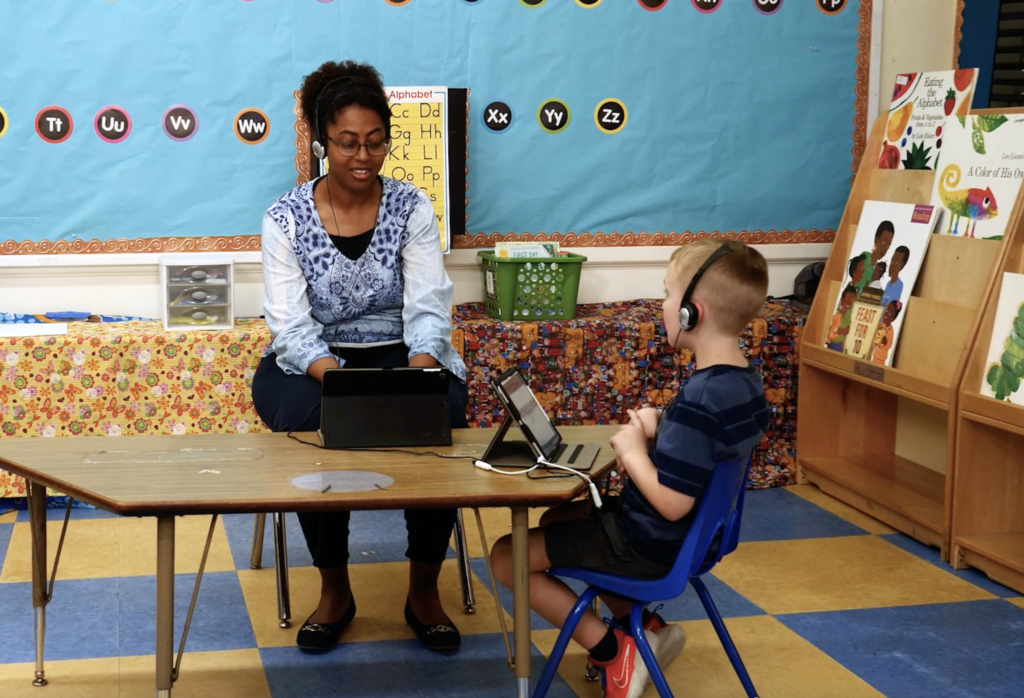
Reading is the foundation of everything that follows in a child’s education. A child who cannot read proficiently by the end of third grade is far more likely to fall behind, and to remain there.
California recognized this urgency when it enacted Senate Bill 114, which requires local educational agencies to screen kindergarten through second grade students for reading difficulties and to provide preventive, targeted instruction. Under the law, reading difficulties are not limited to dyslexia; they include difficulties with any of the reading subskills, whether those difficulties stem from a learning disability or environmental factors such as limited prior instruction or limited literacy exposure at home.
 Can early screening help more California kids learn to read? Teachers are finding out
October 10, 2025
SB 114 represents a meaningful commitment: early identification, paired with responsive instruction, is among the most powerful tools available for supporting struggling readers. The evidence for this approach is robust.
That is why the new statutory requirements set to be added to Education Code Sec. 25. 53008 are so troubling. (See the wording at the bottom of page 161 of the trailer bill.) The update would prohibit schools from administering early literacy screeners until the 91st day of school for kindergartners and the 46th day for first and second graders.
I served as chair of the Reading Difficulties Risk Screener Selection Panel, the body charged with selecting the screening tools California schools now use. To my knowledge, few experts, key education advocates, or selection panel members were meaningfully consulted before these restrictions were proposed.
The majority of tools chosen by the state for screening are designed specifically for beginning-of-year administration. Timing is central to the value of screening. Delaying screening by weeks or months means delaying the identification and support that SB 114 was designed to deliver.
Research confirms that early fall scores are meaningfully predictive of end-of-year and future reading outcomes. More importantly, when fall data is paired with winter data, educators gain a picture of how each child responds to instruction over time, revealing each child’s instructional trajectory. Some students catch up quickly once quality instruction begins; others do not. That difference is essential for calibrating instructional supports. Withholding the fall data point deprives educators of the information they need to act. I have yet to identify any other state that restricts screening in first or second grade.
Proponents of the delay raise a legitimate concern about English learners: that early screening risks misidentifying students whose low scores reflect language acquisition rather than a reading difficulty. SB 114 already addresses this concern. The law directs that screening results be interpreted within the context of a student’s language development, and language proficiency data needed for that interpretation is already collected at enrollment.
Proponents of delay argue that waiting allows educators to observe language and literacy growth before drawing conclusions. However, while informal observation provides useful context, it is no substitute for a validated tool. A score below benchmark is an opportunity to consider whether a student’s profile reflects a typical language acquisition trajectory or a reading difficulty independent of language background. Waiting until winter does not improve that judgment; it simply delays when educators begin making it, and delays the support students may urgently need. A structural delay that withholds data from all students runs counter to both the letter and intent of the law.
California’s schools are in the early stages of implementing SB 114. As districts enter their second year, the focus should be on refining practices based on what was learned in the first year, rather than restructuring processes to accommodate new, arbitrary statutory timelines. Refinement means deepening educator capacity to use screening data, strengthening the assessment-to-instruction infrastructure and improving communication with families.
California’s proposed budget includes $40 million for continued professional development in support of literacy implementation. That investment is both necessary and well timed. Directed toward helping educators interpret screening data in context, plan differentiated instruction and support English learners, those resources can make early screening substantially more effective.
Every child deserves a strong, timely start. No one questions the intent behind the proposed change. Protecting English learners and students from historically underserved communities from misidentification is a legitimate and worthy goal. But delaying screening until the 46th or 91st day of school extends uncertainty for educators and withholds support from the children who need it most. California’s literacy reforms are grounded in science; the policies governing their implementation should reflect that same commitment. The Legislature should remove these restrictions from the budget trailer bill and allow California’s schools to implement SB 114 as both the research and the law intended.
•••
Young-Suk Grace Kim, Ph.D., is a professor at the University of California, Irvine and served as chair of California’s Reading Difficulties Risk Screener Selection Panel.
The opinions expressed in this commentary represent those of the author. EdSource welcomes commentaries representing diverse points of view. If you would like to submit a commentary, please review our guidelines and contact us at commentary@edsource.org.
 What you need to know about the new reading screenings | Quick Guide
October 10, 2025
 What comes after the literacy law: Lessons for California from other states
March 18, 2026
Can early screening help more California kids learn to read? Teachers are finding out
October 10, 2025
Commentary,Evaluations,Unsorted,dyslexia,Reading,UC Irvine#Dont #Californias #young #readers #wait1775018585

