

 wellnessfitpro
In May, President Donald Trump said in an interview he was eager to open the vault at Fort Knox to ensure the U.S. reserves of gold—valued at more than $600 billion—were still there.
Trump was doubling down on plans he and Elon Musk, then-head of the Department of Government Efficiency (DOGE) made last year, calling on an audit of the reserves to delve into conspiracies that gold had been stolen.
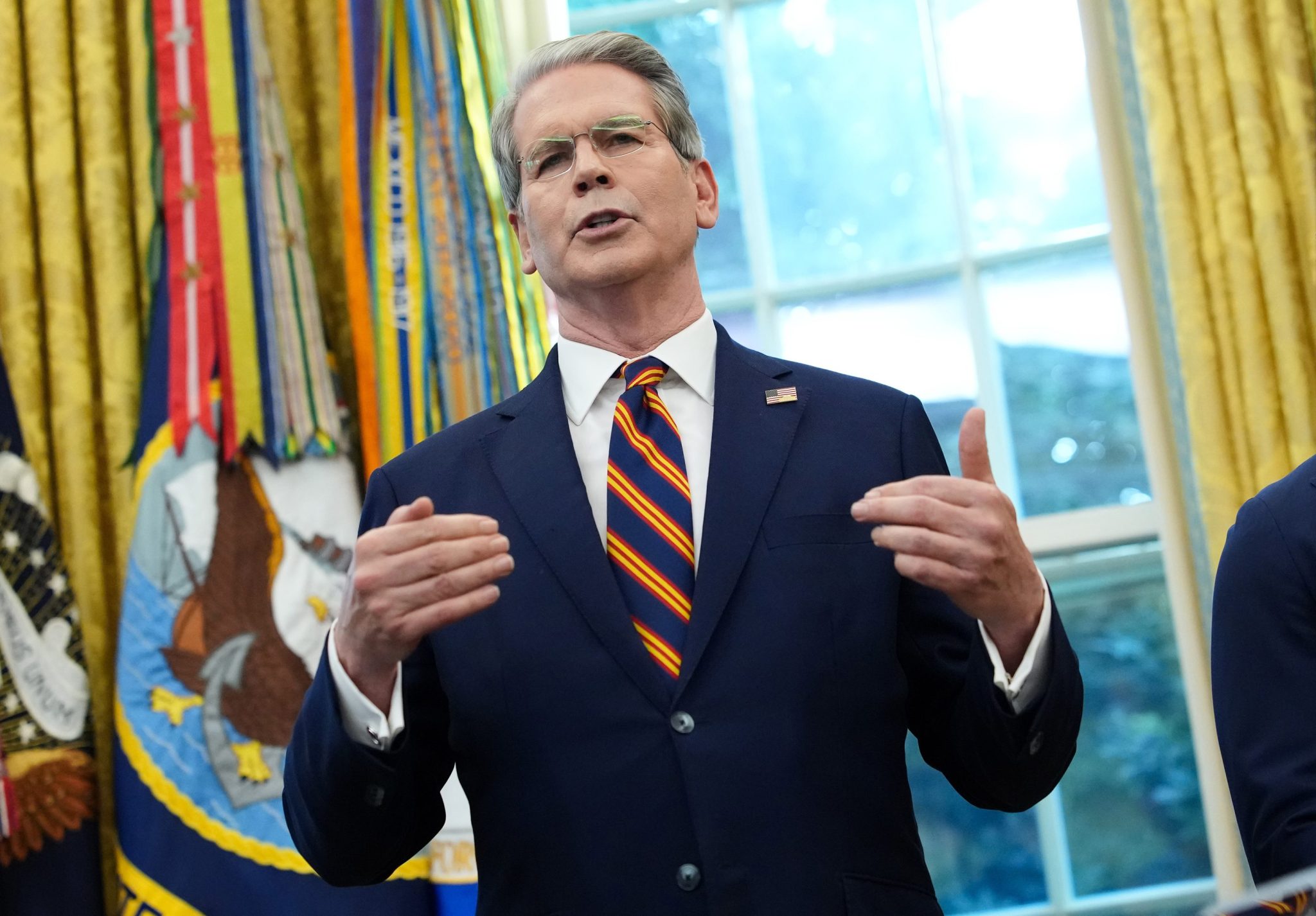
Now, U.S. Treasury Secretary Scott Bessent is offering assurance the cache of gold is indeed safe and sound—but is completely inconsequential to the value of the dollar today.
“The treasurer has been to Fort Knox,” Bessent said in a recent Fox News appearance. “I am happy to say all gold is present and accounted for. The U.S. has the largest pile of gold in the world, over a trillion dollars at current market value.”
Established in 1918 in Kentucky, Fort Knox was a key military installation for the U.S. through both World Wars and the Vietnam War. The Fort Knox Bullion Depository was added years later, holding much of the U.S. gold reserves beginning in 1937. Today it holds about 147.3 million ounces, worth about $608 billion, according to the U.S. Mint.
In its early decades, Fort Knox and the ample military security around U.S. gold reserves was symbolic of the stability of the American currency and economy after the Gold Reserve Act of 1934, which established that the U.S. dollar would be backed by the precious metal. But following then-President Richard Nixon ending the gold standard in 1971, the U.S. supply of the metal lost its primary utilitarian function, a fact Bessent made clear in his recent interview.
“We used to be backed by silver, sometimes gold, and then in the ‘70s we just went to what was called fiat currency, where you didn’t have to keep gold or silver in the vault,” Bessent said. “If any of these are still outstanding, though, the silver or gold for them is at Fort Knox waiting for them to be claimed, if so needed.”
Oil is the new gold
Bessent drawing attention to the U.S.’s changing relationship with gold is a reminder about how the Trump administration may be redefining the value of the dollar in the face of the world economy. The establishment of the gold standard in 1934 paved the way for the creation of the Bretton Woods System a decade later, which tethered the international monetary system to the gold standard, connecting the value of other currencies to the U.S. dollar, which was pegged to the cost of gold at $35 per ounce. By fixing other currencies to the dollar, the global economy could stabilize the value of currencies and facilitate trade.
But by the 1960s, the system was unraveling. The cost of the Vietnam War ballooned U.S. inflation, and the flood of dollars into circulation meant the U.S. was out of the necessary gold to back the influx of available cash, resulting in the overvaluation of the dollar. Other countries began to catch on to the U.S. running out of gold, with France quietly repatriating gold between 1963 and 1966 out of fear the U.S.’s increasing debt would devalue the dollar, and this accelerated Nixon ending the framework in 1971, along with it the gold standard.
Yet, history may be repeating itself. The end of the gold standard paved the way for the creation of the petrodollar, which once again tethered other currencies to the U.S. dollar, which didn’t derive its value from the price of gold, but rather from oil. In 1974, following multiple oil crises, the U.S. struck a deal with Saudi Arabia, where in exchange for Saudi Arabia selling oil in U.S. dollars alone, the U.S. would provide military aid. The deal accomplished Nixon’s goal of securing global demand for U.S. currency as oil became foundational to nearly every industry. As oil-rich countries looked for where to place their growing reserve of greenbacks, they turned to U.S. Treasuries, cementing the dollar at the center of international trade.
A new era of de-dollarization
The gold standard and petrodollar helped stabilize global trade, but renewed geopolitical tensions may be accelerating the erosion of the dollar’s power. The dollar’s share of global foreign exchange reserves has been falling for decades, reaching a 25-year-low of 57% compared to 71% in 1999.
Following the closure of the Strait of Hormuz at the end of February, industry experts said some ships were able to pass through the chokepoint by paying in Chinese yuan, part of a trend of Gulf countries quietly diversifying trade partners and currencies following a series of sanctions that pre-dated the Trump administration. Between July 2025 and January of this year, France withdrew all 129 tons of gold it held in the Federal Reserve Bank of New York, choosing to update the reserve and store it in Paris, making $15 billion through a sale of its previous cache. French officials denied a political motive behind the move.
EBC Financial Group market analyst Sana Ur Rehman argued in a note to clients in May that France’s gold repatriation—and Canada’s similar move to create a $25 billion sovereign wealth fund to make its economy less dependent on the U.S—marks a new era of de-dollarization because it’s America’s long-established allies becoming less reliant on the U.S. currency. This is, in part, a result of tariffs and other trade uncertainties that have rocked trust in the dollar.
“These are not the actions of enemies,” Ur Rehman wrote in a note. “They are the actions of allies and partners who have watched the United States weaponize the dollar-based financial system, and have quietly concluded they need to reduce their exposure to it.”
“That shift,” Ur Rehman continued, “driven by allies rather than adversaries, is what makes the current moment different from anything in the past 80 years of dollar dominance.”
Economy,Finance,EconomyCurrency,Gold,Scott Bessent,U.S. Department of the Treasury#Scott #Bessent #casually #U.S #trillion #goldand #doesnt #matter #dollar1784749123

