

 wellnessfitpro
This sponsored content was created in collaboration with a Skift partner.
In 2026, “premiumization” is the word of the day in travel and hospitality. Regardless of sector, airfare class, chain scale, or price point, companies are under pressure to present premium products, services, and experiences.
Conventional wisdom pigeonholes the premium economy as luxury-seekers and five-star products. That only tells part of the story. In practice, travelers make dozens of choices on any given trip, and they don’t fit a monolithic mold. One customer may choose a five-star hotel but fly basic economy. Another may upgrade for a first-class flight before a backcountry hike. A third might opt for a fixed cost at a three-star all-inclusive resort but splurge on exclusive, private tours during their stay. Each of these individuals might be the same person on different travel occasions.
To better understand how this growing premium economy is changing the travel industry, ZS and Skift have identified five traveler personas who each seek enhanced travel in unique ways, none of whom fit a cookie-cutter consumer profile. This article explains how travel brands can create premiumization strategies for these personas by leveraging existing assets to create unique, upgraded travel experiences that increase customer satisfaction and drive incremental revenue streams.
These five personas aren’t a universal checklist. A revenue or loyalty leader at an airline or hotel may look hardest at business travelers, who drive as much as 60% of air and lodging revenue on just 20% of all trips. A cruise line’s onboard revenue team will find more in live tourism or loyalty points hounds, who spend more on experiences around the trip. Yet the thesis is consistent: the premium play with the highest return potential will likely come through customers brands already serve. Start with the one or two personas who already move through the business in volume, and build from there.
1. The Multifaceted Millennial Parent
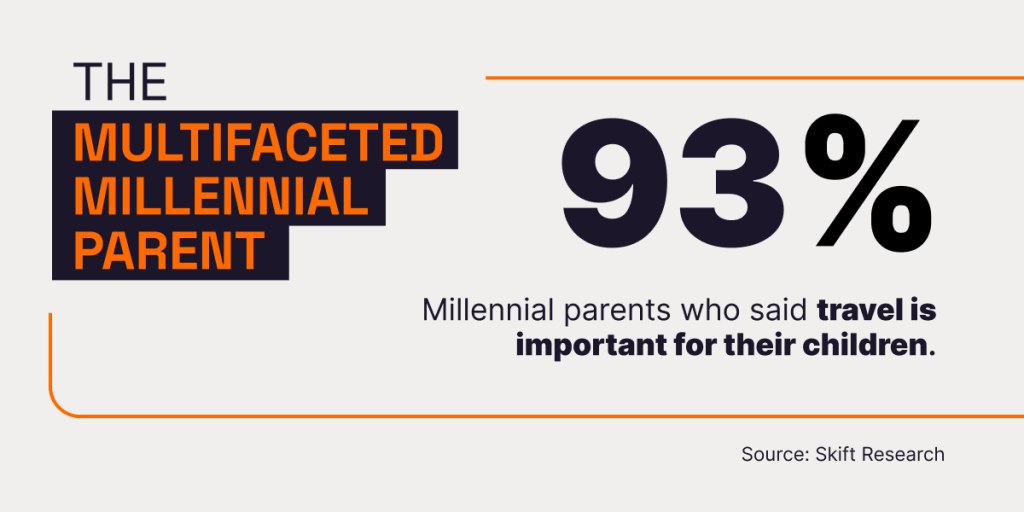
According to Skift Research, 93% of millennial parents said travel is important for their children. Though it seems counterintuitive, many expect to travel even more as their families grow, validating the stereotype that travel is a defining characteristic of this generation’s identity. Multifaceted Millennial Parents juggle more activities, financial pressure, and digital safety concerns than previous generations, yet they’ve remained high-frequency travelers across multiple trip types: with kids, solo, for business, and with friends.
For these travelers, coordination is often a more important consideration than price. Any difficulties they encounter with seating, meals, entertainment, and other logistics quickly erode value. Therefore, premium is about less planning, fewer decisions, and fewer points of friction. Services like bundled seating, pre-ordered meals, and built-in entertainment reduce stress while still enabling the moments that make any trip magical.
This is not a segment easily won by a single experience. Reduce friction in the moments that matter, then convert that into customer loyalty across all travel occasions.
Recommendations for Suppliers
- Sell coordination. Reduce decision-making burdens with packaged seating, meals, and entertainment as a single “family-ready” purchasing option, rather than à la carte ancillaries or nearly-impossible-to-guarantee “special requests.”
- Design for the decision-maker. Communications and loyalty offers should reflect the planner’s persona, not just a generic family profile.
- Build identity profiles for different travel occasions. Recognize the same customer across family, solo, and business travel to capture higher-value bookings on future trips.
2. The Inelastic Business Traveler
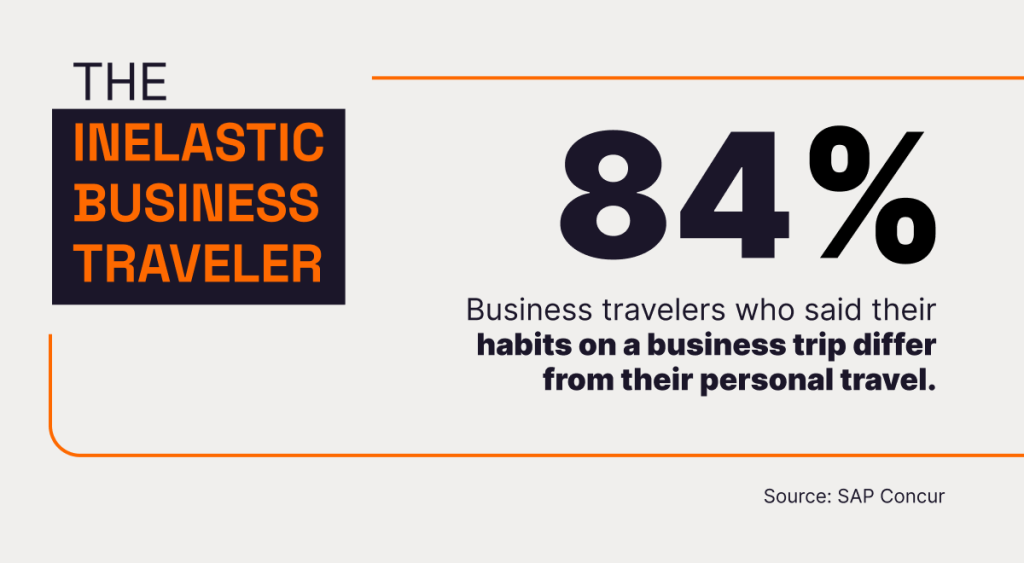
Business travelers represent just 20% of trip volume but up to 60% of air and lodging revenue, according to the U.S. Travel Association. Meanwhile, 84% of business travelers said their habits on a business trip differ from their personal travel. They’ll often opt for higher-quality hotels, direct flights, and premium seating when policy allows. These travelers are defined by frequency and necessity, which makes them comparatively price-insensitive.
The catch: premium for Inelastic Business Travelers is not defined by luxury. It means control over their time and outcomes, such as reliability, productivity, and a low-friction journey.
Contrary to leisure premium, this customer’s value comes primarily through multi-trip retention. Brands that push premium cabins, suite categories, and marquee amenities will lose out to those who invest in smoother booking, better disruption recovery, and end-to-end coordination. AI-driven booking tools are already reshaping how these travelers shop, and a disrupted trip can dramatically increase the risk of loyalty defection.
Recommendations for Suppliers
- Compete for time savings. Offer options for faster security, app-driven rebooking, and predictive disruption alerts over typical upgrades.
- Deliver during disruption. Treat irregular operations as the highest-stakes brand moment. Proactive rebooking and human-led customer service protect lifetime value more than any amenity.
- Create value with smaller wins. Lounge access, lie-flat seats, premium ground transport, and fast Wi-Fi are policy-friendly indulgences that drive share of wallet. It all adds up.
3. The Live Tourist
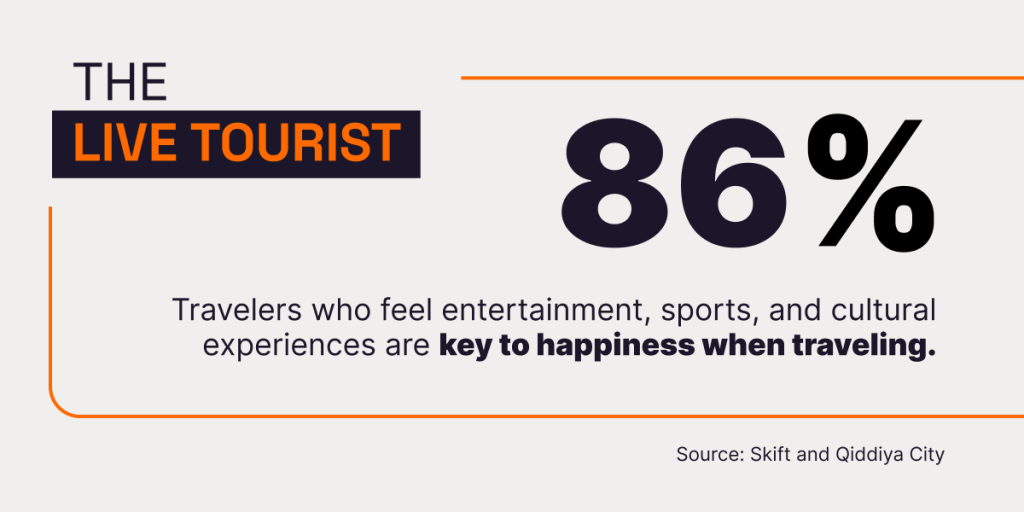
A global survey from Skift and Qiddiya City found 86% of travelers feel that participating in entertainment, sports, and cultural experiences while traveling is important to their happiness, and 75% said these experiences matter more now than before the Covid-19 pandemic.
Live Tourists care about community and collective experience. They’re event-first, destination-second. Some travel for the festivities surrounding an event without ever buying a ticket, happy just to be in the atmosphere.
The tension is that these travelers compress demand into narrow windows and concentrated geographies. Many brands respond with surge pricing and call it a day, missing the chance to monetize the surrounding experience. By default, hotels treat fans as undifferentiated heads in beds, and airlines treat the route as a route, not considering its role in any particular event. The brands that can effectively and efficiently scale the act of turning proximity into a product will put themselves in a winning position.
Recommendations for Suppliers
- Own the atmosphere. Build packages around fan zone access, themed F&B, or watch parties for travelers who came for the scene.
- Offer event-specific concierge services. Offer post-event priority transport and timed amenities that solve event-day bottlenecks.
- Join the journey. Co-market with venues and ticketing platforms so your brand is more than a downstream beneficiary.
- Automate. Deploy technology (not just AI) to drive advanced event notifications, package creation, pricing, and marketing content at scale with reduced costs.
4. The Points Player
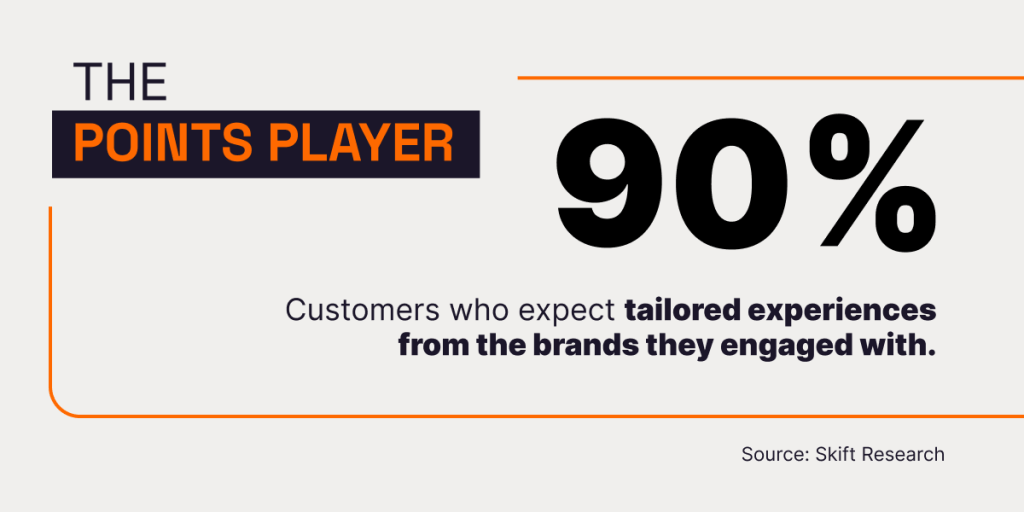
Customers expect brands to understand their individual needs, and 90% expect tailored experiences, according to Skift Research. Yet travelers belong to more loyalty programs than ever, and both loyalty and engagement have declined.
Points Players treat premium as a simple exchange: Get the biggest upgrade for the lowest amount of money. They are not loyal to a particular brand so much as they’re accustomed to a certain lifestyle, and they will switch programs, stack credit cards, and time bookings to maintain it.
Brands can win and keep this frequent, enthusiastic, and vocal traveler by acknowledging that customers shop multiple programs. Be the brand that helps them do it well.
Recommendations for Suppliers
- Become a redemption advisor. Offer an AI- or human-powered concierge that surfaces high-value redemptions across a customer’s full loyalty portfolio, not just yours.
- Create a status match. Borrow the wireless industry’s playbook: offer a 90-day elite-status match to competitor loyalists, then convert the trial to permanence with earning bonuses.
- Reward individuals while preserving exclusivity. Recognize co-branded card use, partner bookings, and direct loyalty with non-status perks like upgrades and late checkouts, which offer premium experiences without diluting top tiers.
5. The Rich but Not Famous
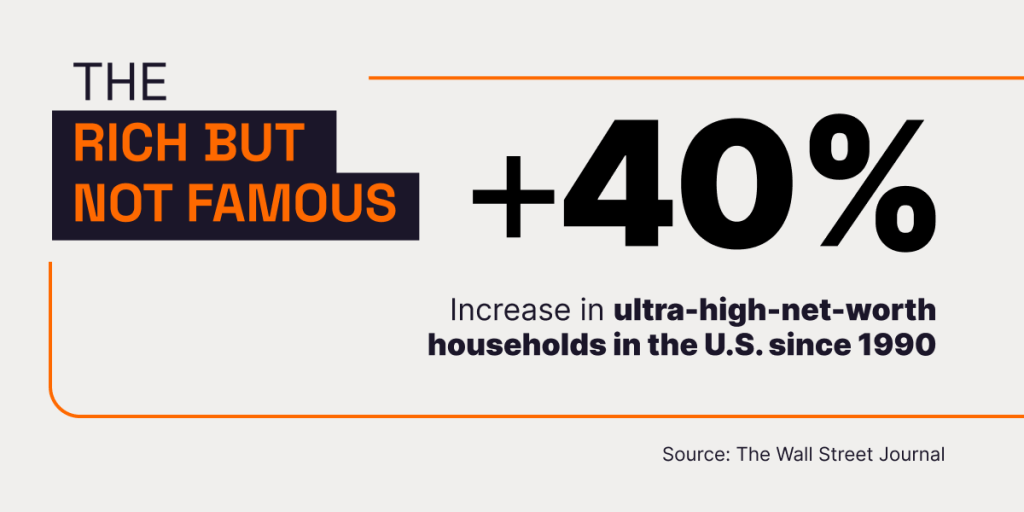
Roughly 430,000 U.S. households are now worth more than $30 million, an increase of more than 40% since 1990, according to The Wall Street Journal (which coined the name for this persona). The “K-shaped economy” has produced a deep, durable pool of high-net-worth travelers who do not behave as most travel brands assume.
On paper, this is the most obvious premium customer. There are few limits to what they can afford. Capturing their business is less about what they want and more about how it’s delivered. Many affluent consumers are leaning into “quiet luxury,” i.e., opting out of opulence and into curated comfort and effortlessness. They want high quality and low friction, and they notice every place those two break apart.
Brands fail this segment with performative luxury, like gold-trimmed lobbies, scripted greetings, and monogrammed amenities the customer didn’t ask for. For them, premium is a brand that knows the customer, anticipates requests, and removes small inconveniences that money alone cannot solve. While high-end luxury suppliers have been doing this for years, all travel players can now leverage technology to do this at scale for all their travelers.
Recommendations for Suppliers
- Add by subtracting. Curate fewer, better touches over broad, loud displays of luxury.
- Emphasize personal, human service. Offer in-cabin or on-property hosts for a high-margin, low-visibility tier.
There’s a high cost to treating premiumization as optional. AI-driven booking tools are already reshaping how the most valuable travelers shop, loyalty and engagement are declining even as customers join more programs, and a single disrupted trip can move a high-value traveler to a competitor for good. Any strategy that prioritizes capital investments over delivering premium experiences to existing customers leaves market share on the table.
Successful premiumization strategies require a systemic approach that goes far beyond simple product delivery:
- Define premium for their brand and clearly identify how to deliver to these segments with respective offerings.
- Minimize friction for consumers.
- Execute against the strategy by tuning marketing and personalization programs, optimizing pricing algorithms, or including new offers in revenue management strategies for these segments.
- Commit to a meaningful investment in premiumization, without which expectations of impactful returns should be tempered.
Brands approaching premiumization as an arms race to match each other’s cabins, suites, and marquee amenities may be misplacing capital while the higher-margin opportunity, the customer base they already serve, goes unmonetized. A premiumization strategy, focused on the core offering and core customers, can help travel brands create and maintain a competitive advantage squarely in the middle of their main value proposition.
To learn more about how to identify your company’s unique assets that can diversify your revenue streams, read the 2025 report from ZS and Skift.
To learn more about ZS and its solutions for the travel and hospitality industry, please visit https://www.zs.com/industry-insights/travel-and-hospitality.
This content was created collaboratively by ZS and Skift Studio..
Luxury,Tourism,experience,partner content,premium travel,premiumization,Skift Studio,Skift Studio Showcase: Hospitality,traveler behavior,zs associatesexperience,partner content,premium travel,premiumization,Skift Studio,Skift Studio Showcase: Hospitality,traveler behavior,zs associates#Types #Travelers #Driving #Premium #Demand1781631982

