

 wellnessfitpro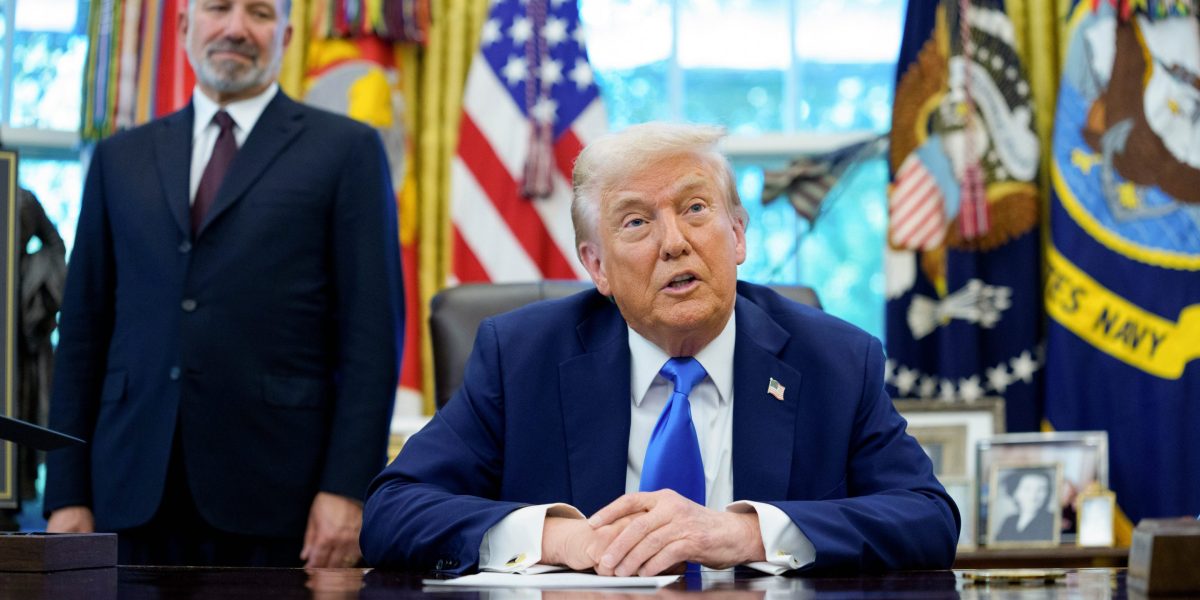
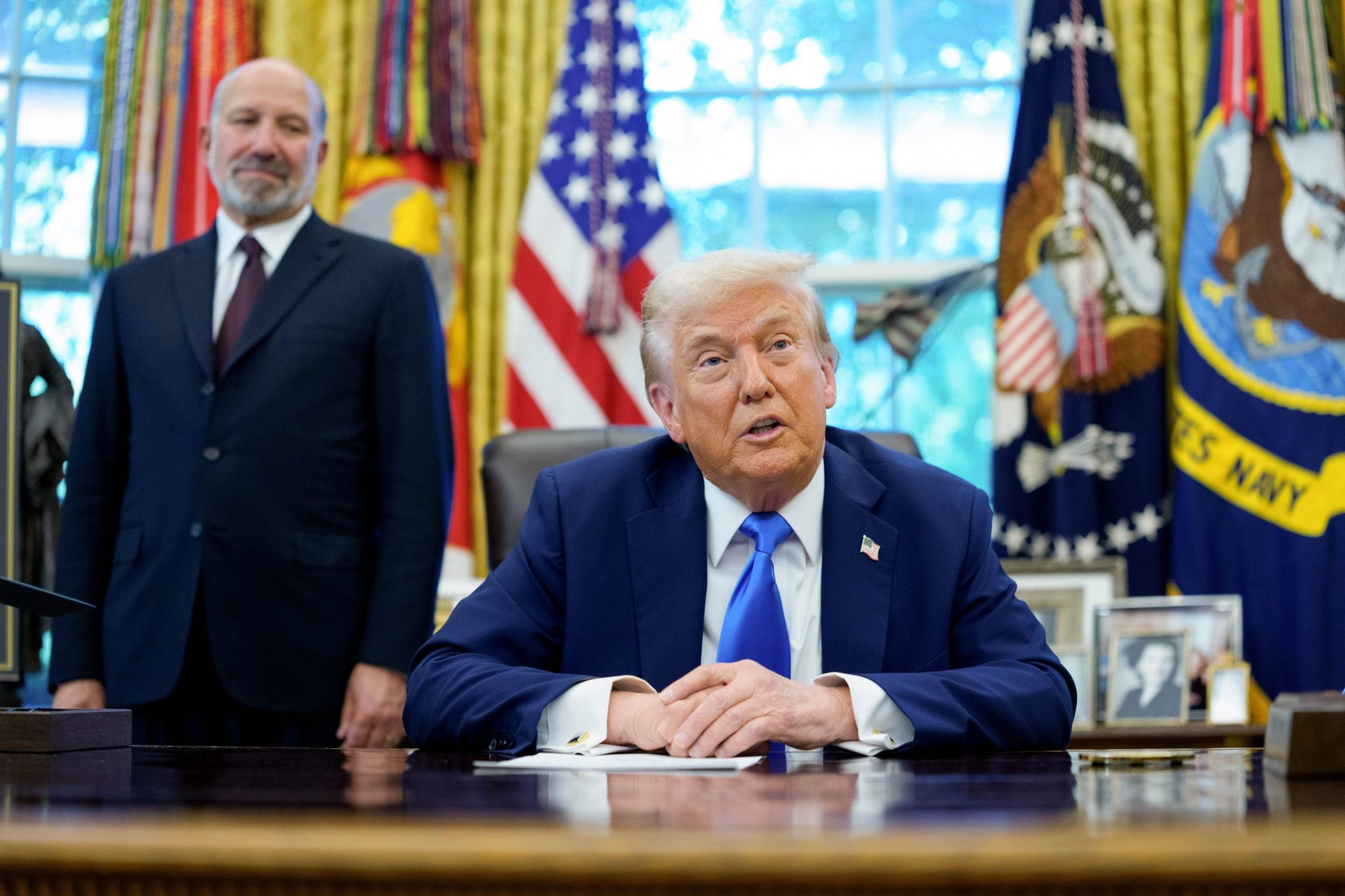
When President Donald Trump suddenly imposed a $100,000 fee on new H-1B visas last year, leading AI companies didn’t flinch. Nvidia CEO Jensen Huang told CNBC he was “glad to see President Trump making the moves he’s making,” and OpenAI’s Sam Altman said aligning financial incentives around skilled immigration “seems good” to him.
Eight months later, the visa fee has split the tech industry in two. The frontier AI companies that publicly supported the move have sharply increased their foreign-worker filings, even at $100,000 a head—while the Big Tech giants with far larger workforces have pulled back. And on Monday, a federal judge struck the fee down entirely, calling it an unlawful tax.
Big Tech companies are overwhelmingly the largest holders of H1-B visas. On Monday, a federal judge struck President Donald Trump’s $100,000 visa fee for highly skilled immigrant workers. But that’s no matter to the Big Tech companies that have doubled down on immigrant employees, despite their high price tag.
Nvidia’s certified H-1B applications rose 19% in the first quarter of this year compared with the same period in 2025, according to a Fortune analysis. OpenAI’s more than tripled, and Anthropic went from roughly 10 to nearly 60.
Over the same stretch, Amazon—the country’s single largest H-1B sponsor—along with Google and Microsoft posted steep declines, with smaller dips at Meta and Apple. The divergence comes down to math. For a company like Amazon, which sponsors H-1B workers by the thousands across its engineering and corporate ranks, a $100,000 surcharge on every new hire could be a budget-breaking line item. For an AI lab racing to hire a few hundred elite researchers while sitting on billions in fresh capital, it’s a rounding error. Nvidia’s roughly 765 certified applications, which include new, promoted, and transferring employees, look trivial against an R&D budget in the tens of billions, and a small premium to pay in a talent war where a single researcher can move the needle.
It also helps that the fee is narrower than it first appeared to be. The charge applies once, to new petitions filed after Sept. 21, and largely to applicants coming from overseas — not to renewals, extensions, or most workers already in the U.S. Companies are looking for other ways to bring in foreign-born talent while skirting the fee by submitting applications for other visas or hiring existing H-1B holders, the Wall Street Journal reported.
The visa fee has proven prohibitive for other businesses. The U.S. Citizenship and Immigration Services said that it received 211,600 properly submitted applications for the 2027 H-1B allocation, down from 343,981 the year before, Business Insider reported. The decline is a blow to small businesses that can’t afford the fee, but previously benefited from the visa program. A Richmond Federal Reserve study found that winning the H-1B lottery increased employment and revenues between 2020 and 2023, and that companies that won were more likely to survive in the years that followed.
Huang acknowledged that the fee could be prohibitive for some, especially if their employer isn’t covering it.
“I don’t think that my family would have been able to afford the $100,000, and so the opportunity for my family and for me to be here…would not have been possible,” Huang told CNBC in October.
Striking it down
In November, Trump told Fox News that American workers “have to learn” the competitive technical skills foreign-born workers on H-1Bs have.
“You don’t have certain talents, and people have to learn,” he said. “You can’t just say a country is coming in, going to invest $10 billion to build a plant and take people off an unemployment line who haven’t worked in five years and they’re going to start making their missiles. It doesn’t work that way.”
But on Monday, U.S. District Judge Leo Sorokin in Boston sided with the 20 states that had sued, ruling that the fee amounted to a tax Congress never authorized the president to impose. “The Court finds that the Policy imposes a tax on H-1B petitions without the requisite delegation by Congress,” Sorokin wrote.
The decision deepens a legal split rather than settling it. Sorokin’s ruling—a summary judgment—directly contradicts a separate case in Washington, D.C., where a federal court upheld the fee in a challenge brought by the U.S. Chamber of Commerce, a decision now on appeal. A third suit, filed by religious and labor groups in San Francisco, is still pending. With cases moving through three different appellate circuits, the question looks headed for a higher court—possibly the Supreme Court—even as the fee is set to expire on its own in September 2026.
In the meantime, employers are left guessing whether the $100,000 charge applies to petitions filed today. The administration is expected to appeal.
AI,Tech,AIAmazon,Anthropic,Google,Immigration,Nvidia,OpenAI#OpenAI #Nvidia #CEOs #didnt #flinch #Trumps #H1B #visa #fee #theyre #paying #application #numbers #soar1781102589

